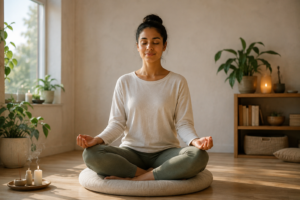
How to Set Up a Meditation Space at Home

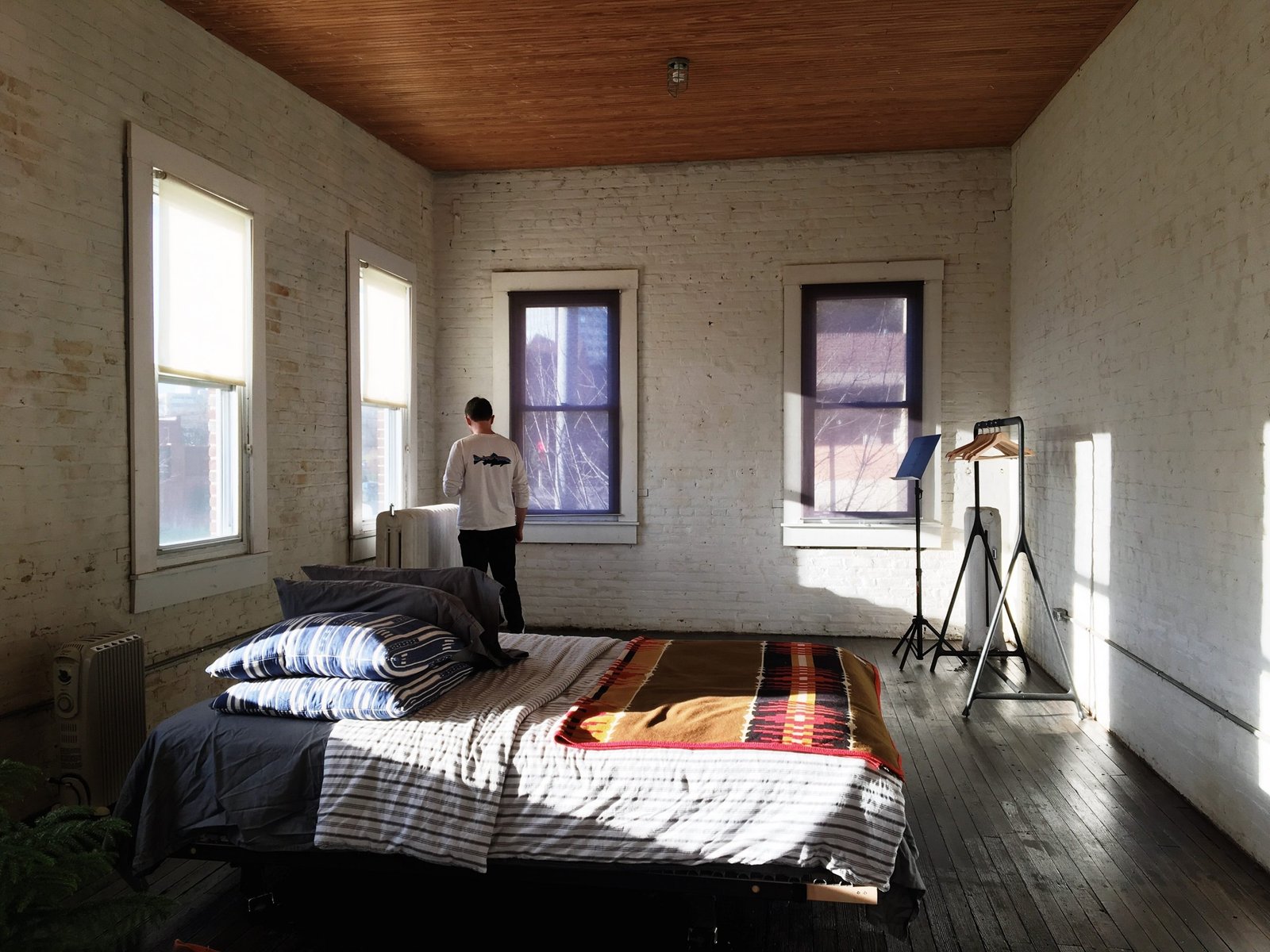
You do not need a spare bedroom, a Buddha statue, expensive cushions, or a perfectly decorated corner to meditate.
A meditation space has one real job: when you enter it, it should remind you that for the next few minutes you are stepping away from the noise and turning inward.
That space might be a corner of your bedroom, a chair by a window, a cushion on the floor, or even something you set up and put away when you are finished. What matters is the intention you bring to it and whether the space helps you become still.
Creating a meditation space is one way of signaling that meditation matters in your life. It gives you a place associated with silence, stillness, contemplation, and spiritual practice. The space does not have to be impressive. It simply has to support the kind of attention you want to bring to your practice.
“The energy of your home reflects your inner state—and influences it, too.” — Karen Kingston
Choose a Place You Can Return To
You do not need a separate room for your meditation space. A corner of the living room or bedroom can work. So can a space under the stairs, a large empty closet, a chair near a window, or a cushion that you bring out when it is time to meditate.
The amount of space you need depends on whether the area is just for you, whether someone else will use it, and whether you also want room for yoga or stretching. At minimum, you need enough space to sit comfortably and quietly.
When possible, use the same spot regularly. Familiarity helps build the habit. Over time, simply sitting down there can become a signal to your mind that this is where you become quiet and return to center.
If creating a calmer environment is part of what you need, these activities for inner peace and tranquility can support the same intention.
Remove What Competes for Your Attention
A meditation space does not have to be empty, but it should not constantly pull your attention in ten directions.
Clear away obvious clutter, unfinished work, blinking screens, piles of laundry, and anything else that reminds you of what you should be doing instead. You are not trying to create a showroom. You are creating a place where your mind has fewer reasons to wander.
If spiritual cleansing practices are meaningful to you, you might also use sound, incense, essential oils, prayer, or another ritual to mark the space as different from the rest of the room. Those practices are optional. Use what genuinely helps you become more present.
Make Your Body Comfortable and Alert
Your body should feel supported enough that discomfort is not the only thing you can think about, but not so comfortable that you immediately fall asleep.
A meditation cushion, folded blanket, bench, or upright chair can all work. There is no prize for sitting in a position that hurts just because it looks more spiritual.
Soft lighting, a rug, a blanket, or a supportive cushion can make the area more welcoming. The goal is to help your body feel safe, steady, and awake enough for practice.
Add What Has Spiritual Meaning for You
This is where your meditation space becomes personal.
You might include candles, crystals, pictures, statues, mandalas, flowers, driftwood, stones collected on walks, a singing bowl, meaningful books, prayer beads, or anything else that helps turn your attention toward what matters to you.
An altar can be especially useful if you want the space to feel sacred. It does not have to belong to any particular religion or tradition. An altar can simply be a small place where you keep objects that remind you of your intentions, your spiritual path, the people you love, or the qualities you want to cultivate.
Keep a journal nearby if writing after meditation helps you notice insights, recurring thoughts, or changes in your practice.
Your space can also reflect the larger spiritual journey you are exploring. If that is where you are right now, these five steps to finding your spiritual path may help you think more deliberately about what belongs in the space and why.
Treat the Space as Sacred—Even If It Is Temporary
You do not need a permanent meditation room to create a sense of ritual.
If your meditation space is portable, set it up with intention. Put it away with intention. Let the people around you know when you are using it so you are less likely to be interrupted.
The more consistently you treat the space as meaningful, the stronger the association with stillness and spiritual practice can become.
Your meditation space is a reflection of your intention. It does not need to be perfect, expensive, permanent, or impressive. It needs to help you remember why you sat down in the first place.
Let the Space Support the Practice
A beautiful meditation corner will not meditate for you. The real value of the space is that it makes it a little easier to return to the practice again and again.
Use the space. Sit quietly. Breathe. Pray. Observe your thoughts. Return when your mind wanders. Let the objects around you support the practice without becoming the practice.
Eventually, the goal is not to need perfect surroundings in order to become still. But creating a place that supports you can be a powerful way to begin.
Want to make better use of the space you just created?
If you are ready to deepen the practice itself, The Meditation Master Program gives you guided meditation sessions and practical resources for mindfulness, gratitude, visualization, focused awareness, and spiritual growth.
Discover more from Jepsen Mindset and Meditation Monk
Subscribe to get the latest posts sent to your email.
What’s Your Body Trying to Tell You?
Feeling tired, sluggish, bloated, or just not quite like yourself?
Sometimes it helps to stop guessing and take a closer look at your everyday wellness habits, nutrition, energy, and goals.

Take this FREE 2-minute Health Check and get recommendations based on your answers and what you want to improve.
No complicated forms. No pressure. Just a quick way to get a little more clarity about where you are—and what you may want to explore next.
Real Questions
Personalized Suggestions
ZERO Cost to You
A couple of minutes could give you a better idea of where to start.