Mantra Meditation: Benefits, Examples, and How to Begin


Mantra meditation is more than repeating a phrase. It is the practice of returning your attention to a chosen word, sound, prayer, or sacred expression until the mind begins to settle around it.
A mantra may be spoken aloud, whispered, or repeated silently. Some mantras come from ancient spiritual traditions. Others are simple English phrases that express peace, divine connection, healing, gratitude, or a chosen state of being.
The purpose is not to fight every thought or force the mind into silence. The mantra gives your attention somewhere meaningful to return whenever it wanders.
With repetition, the words become more than something you say. They create a rhythm, carry an intention, and help bring your thoughts, emotions, and spiritual awareness into greater alignment.
“In the beginning was the Word, and the Word was with God, and the Word was God.”
Sacred sound appears in many spiritual traditions, although each tradition understands it through its own theology and practice. The common thread is the recognition that words are not always empty sounds. They can carry intention, direct consciousness, express devotion, and remind us of our relationship with the Divine.
What Is Mantra Meditation?
Mantra meditation is a form of focused-attention meditation in which a sound, word, or phrase becomes the central point of awareness.
The National Center for Complementary and Integrative Health includes a repeated word or phrase among the sounds that may be used as the focus of meditation. When your mind wanders, you gently return to the mantra rather than criticizing yourself for becoming distracted.
In spiritual practice, a mantra may also be a prayer, invocation, sacred name, affirmation, or vibration associated with a particular quality of consciousness.
The word mantra comes from Sanskrit and is often understood as an instrument or tool of thought. Mantras have an especially important place in Hindu and Buddhist traditions, although repeated sacred words and prayers appear in many forms of spiritual practice.
In Buddhist teaching, mantras are used to help the practitioner remain focused on beneficial qualities such as compassion, clarity, and wisdom. Study Buddhism offers additional context on the purpose and meaning of mantra practice.
What Are the Benefits of Mantra Meditation?
Mantra meditation can make it easier to remain focused because you are giving the mind a clear and repeatable point of attention.
The rhythm of repetition may also help you:
- Step away from scattered inner conversations
- Create a calmer breathing rhythm
- Return attention to the present moment
- Strengthen a spiritual intention
- Establish a consistent meditation routine
- Cultivate qualities such as peace, compassion, gratitude, or trust
A systematic review and meta-analysis of mantra-based meditation found small-to-moderate improvements in anxiety, stress, depression, and post-traumatic stress symptoms. The researchers also cautioned that the available evidence was limited by study bias and a shortage of long-term research.
This makes it more accurate to say that mantra meditation may support calm and emotional well-being rather than promising that it will produce a specific physical or psychological result for everyone.
How to Choose a Mantra
The right mantra is one you can return to naturally and meaningfully.
Consider these questions:
- Does the mantra express a quality I want to cultivate?
- Does it feel spiritually meaningful to me?
- Is it short enough to repeat without effort?
- Do I understand its meaning and tradition?
- Does repeating it create greater peace, clarity, or connection?
Sanskrit is not required. A mantra can be a sacred phrase from a spiritual tradition, the name of God as you understand God, a line of prayer, or a simple English statement.
When using a traditional Hindu or Buddhist mantra, it is respectful to learn where it comes from and what it is intended to cultivate rather than treating it as a collection of mysterious sounds.
Traditional Sanskrit and Buddhist Mantras
1. Om or AUM
Om is a sacred syllable described in the Upanishadic tradition as an object of meditation. It is used in several Indian spiritual traditions and is often understood as a symbol of ultimate reality, divine consciousness, or the totality of existence.
You may chant it slowly, allowing the sound to move through the body before resting in the silence that follows.
2. So Hum
So Hum is commonly translated as “I am That.”
It may be synchronized with the breath by silently repeating So while inhaling and Hum while exhaling. The mantra invites contemplation of unity between the individual self and the greater Divine reality.
3. Om Shanti Shanti Shanti
Shanti means peace.
Repeating the word three times is traditionally used as an invocation of peace. You can allow each repetition to deepen the feeling of peace within your mind, relationships, and experience of the world.
4. Om Mani Padme Hum
This well-known Tibetan Buddhist mantra is associated with Avalokiteshvara, the embodiment of compassion.
Its meaning is layered and should not be reduced to one simple English translation. Its syllables are commonly understood as bringing together compassion, wisdom, and the transformation of ordinary body, speech, and mind. Study Buddhism explains the mantra in greater detail.
Simple English Mantras
5. I Am at Peace
Repeat this phrase slowly while allowing your body to soften.
You are not denying the existence of challenges. You are choosing peace as the inner state from which you will meet them.
6. Let Go
Silently repeat Let as you inhale and Go as you exhale.
Use the words as a gentle invitation to release physical tension, racing thoughts, or the need to control every detail.
7. I Am Light
This mantra can be used as a reminder of your spiritual identity, inner clarity, and connection with the Divine.
As you repeat it, imagine light filling your body, surrounding you, and moving into the situations that need greater peace or understanding.
How to Practice Mantra Meditation
1. Sit Comfortably
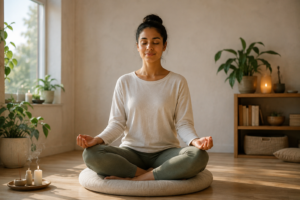
Find a position that allows you to remain relaxed but alert. You may sit in a chair, on a cushion, or anywhere you feel supported.
2. Settle Your Breathing
Take several slow breaths. Let your shoulders relax and allow your attention to move away from the activity of the day.
3. Begin Repeating the Mantra
Say the mantra aloud, whisper it, or repeat it silently.
Do not rush. Allow the words and the spaces between them to become part of the practice.
4. Return When the Mind Wanders
Your mind will probably wander. That is not a failed meditation.
Notice that your attention has moved, and gently return to the mantra. Each return is part of the practice.
5. Continue for Five to Ten Minutes
Beginners can start with a few minutes and gradually extend the practice. Consistency is more useful than forcing yourself through a long session.
6. End with Silence
Stop repeating the mantra and sit quietly for several breaths.
Notice the quality of your thoughts, emotions, body, and inner awareness before returning to your day.
Common Questions About Mantra Meditation
Do I Have to Say the Mantra Aloud?
No. Mantras can be spoken, whispered, chanted, or repeated mentally. Try each approach and notice which one best supports your attention.
Do I Need to Use Sanskrit?
No. Traditional Sanskrit mantras have their own history and spiritual importance, but an English word, prayer, or sacred phrase can also become the focus of meditation.
Should I Use the Same Mantra Every Day?
Repeating one mantra consistently can help it become familiar and natural. However, you may choose different mantras for different intentions or seasons of your spiritual life.
What If I Cannot Stop Thinking?
You do not need to stop every thought. The practice is noticing that your attention wandered and returning to the mantra without judgment.
Can Mantra Meditation Ever Feel Uncomfortable?
Yes. Meditation is generally considered low-risk, but some people do report difficult experiences such as increased anxiety. If mantra meditation repeatedly makes you feel more distressed, shorten the practice or stop and try a gentler approach. If the distress is significant or persistent, appropriate professional support may also be helpful.
Let the Mantra Become an Inner Anchor
Over time, a mantra can become a thread that weaves through your daily life.
You may find yourself returning to it before a difficult conversation, during a stressful moment, while walking, or as you prepare for sleep.
The words begin as something you intentionally repeat. With practice, they can become an inner reminder of the peace, faith, compassion, or spiritual identity you are choosing to embody.
You do not need the perfect voice, posture, or amount of time. Choose one meaningful mantra, repeat it with attention, and allow the practice to deepen naturally.
Ready to Deepen Your Meditation Practice?
If you are ready to create a calmer and more consistent relationship with meditation, Mindful Meditation offers a practical next step for strengthening awareness, focus, and inner peace.
Discover more from Jepsen Mindset and Meditation Monk
Subscribe to get the latest posts sent to your email.
What’s Your Body Trying to Tell You?
Feeling tired, sluggish, bloated, or just not quite like yourself?
Sometimes it helps to stop guessing and take a closer look at your everyday wellness habits, nutrition, energy, and goals.

Take this FREE 2-minute Health Check and get recommendations based on your answers and what you want to improve.
No complicated forms. No pressure. Just a quick way to get a little more clarity about where you are—and what you may want to explore next.
Real Questions
Personalized Suggestions
ZERO Cost to You
A couple of minutes could give you a better idea of where to start.