How to Meditate for Pain Relief


Meditation cannot diagnose or remove the cause of pain, and it does not work the same way for everybody. But mindfulness and meditation can help some people change how they relate to pain, reduce some of the tension and distress surrounding it, and feel less consumed by the sensation.
That matters because pain is not experienced by the body alone. Attention, emotion, fear, tension, memory, and expectation can all influence how pain feels. Meditation does not replace appropriate medical care, but it can be one useful tool for responding to discomfort with more awareness and less struggle.
“You can’t stop the waves, but you can learn to surf.”
— Jon Kabat-Zinn
Here is a simple way to meditate with pain.
1. Find a Position Your Body Can Tolerate
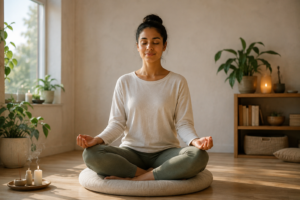
Choose a position that gives your body as much support as possible. You may sit on the floor, on a bed, in a chair, stand, or lie down.
The goal is not to force a traditional meditation posture. If you are already hurting, there is no prize for making yourself more uncomfortable. Use cushions, a backrest, or another form of support if that helps.
Try to avoid a posture that compresses your spine or increases your pain. If you need to move during meditation, move. Comfort and safety matter more than perfect stillness.
2. Let Your Breath Become an Anchor
Once you are settled, bring your attention to your breathing.
You do not need a complicated count or a long breath hold. Breathe slowly and comfortably. If it feels natural, let the exhale become a little longer than the inhale.
Pay attention to the physical sensation of breathing: air moving through your nose, your chest or abdomen rising and falling, and the brief pause between breaths.
Your breath gives you something steady to return to when your attention becomes pulled into pain, fear, or frustration.
If you want more simple practices for calming your attention, these activities for inner peace and tranquility may help.
3. Bring Gentle Awareness Toward the Pain
When you feel ready, bring your attention toward the area of discomfort.
You do not have to fix it, fight it, or pretend it is not there. Simply notice what you actually feel. Is the sensation sharp, dull, hot, cold, tight, throbbing, heavy, or changing?
You can also use visualization. As you breathe, imagine the breath creating space around the painful area. The breath is not literally traveling into your knee, back, shoulder, head, or other painful spot. This is simply a mental image you can use to encourage less bracing and tension around the sensation.
You may notice some of the surrounding tension soften. If you do not, that does not mean you are doing the meditation incorrectly.
4. Widen Your Attention Beyond the Pain
Pain can become so demanding that it seems to fill your entire awareness. One useful practice is deliberately noticing what else is present.
If your left foot hurts, notice how your right foot feels. Notice the support beneath your body, the movement of your breath, the temperature of the room, or another part of your body that feels neutral or comfortable.
As you exhale, you may imagine some tension leaving the body. You are not trying to command the pain to disappear. You are reminding yourself that pain is one part of your present experience, not the whole of it.
With practice, you may become better at noticing pain without immediately adding fear, resistance, or mental tension to it.
Research on meditation for pain is mixed, and results vary by person and condition. The NIH’s National Center for Complementary and Integrative Health overview of meditation and mindfulness discusses the evidence in more detail.
Meditation can complement appropriate pain care, but new, severe, unexplained, or worsening pain deserves medical evaluation.
Guided Meditation for Pain Relief
(Approx. 5–7 minutes)
Begin by finding a comfortable position.
You may be sitting or lying down—whatever allows your body to be supported without strain. Close your eyes if that feels safe, or soften your gaze.
Take a slow, easy breath in… and let it out gently.
Again—inhale comfortably… and exhale with ease.
Let your breath begin to anchor you in the present.
Now bring your awareness to the area of discomfort.
You don’t need to fix or fight it—just notice. Is it sharp? Dull? Tight? Warm? Cool?
Simply observe it, like you would watch clouds pass in the sky.
Say to yourself silently:
“This is what is here right now. And I can be with it.”
Now, bring your attention to the space around the pain.
Feel the areas that are not hurting. Notice the breath in your chest…
The stillness in your hands… The support under your body.
Let yourself feel held.
With each breath, imagine softening around the pain.
Not pushing it away, just relaxing the tension that surrounds it.
Inhale…
Exhale…
Repeat silently:
“I soften. I allow. I breathe.”
Stay here for as long as you like.
When you’re ready to finish, bring your awareness back to your breath.
Then to the room. Wiggle your fingers and toes. And open your eyes when you feel ready.
You can return to this meditation when pain flares up if it feels supportive. It is not about erasing the sensation. It is about giving yourself a calmer place from which to respond.
If you want to make meditation a more regular part of your life, setting up a meditation space at home can make it easier to return to the practice consistently.
Want to Build a More Consistent Meditation Practice?
The Meditation Master Program includes guided sessions and practical resources for mindfulness, focused awareness, visualization, gratitude, and spiritual growth.
This article is for general educational and wellness purposes. It is not medical advice, diagnosis, or a substitute for care from a qualified healthcare professional.
Discover more from Jepsen Mindset and Meditation Monk
Subscribe to get the latest posts sent to your email.
What’s Your Body Trying to Tell You?
Feeling tired, sluggish, bloated, or just not quite like yourself?
Sometimes it helps to stop guessing and take a closer look at your everyday wellness habits, nutrition, energy, and goals.
Take this FREE 2-minute Health Check and get recommendations based on your answers and what you want to improve.
No complicated forms. No pressure. Just a quick way to get a little more clarity about where you are—and what you may want to explore next.
Real Questions
Personalized Suggestions
ZERO Cost to You
A couple of minutes could give you a better idea of where to start.