Reflexology Starter Collection
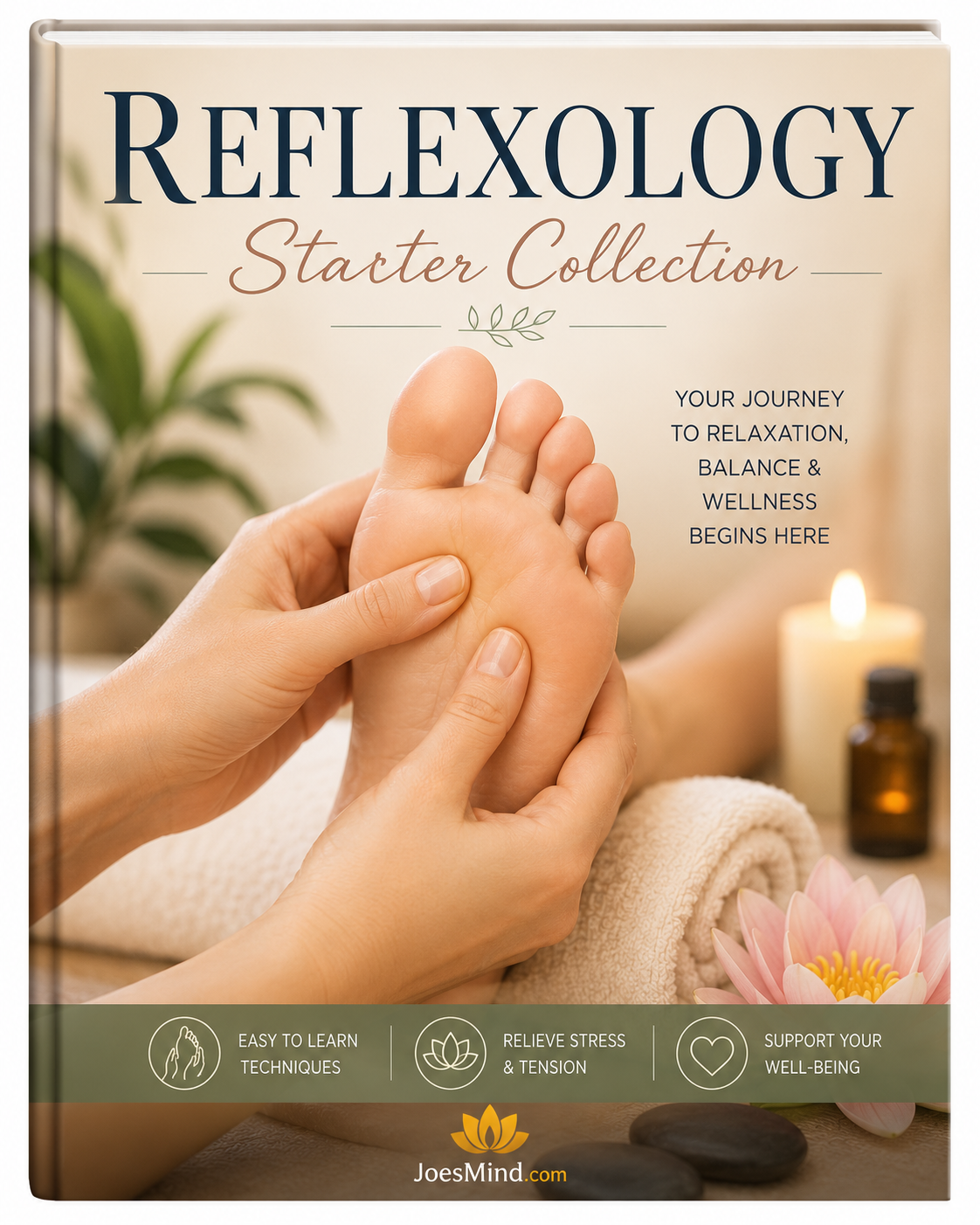
Explore the traditional practice of reflexology with two illustrated beginner-friendly ebooks and a full-color foot pressure-point map.
This downloadable collection introduces reflexology history, zone theory, foot and hand techniques, self-care practices, appointment preparation, safety considerations, and the traditional relationships between areas of the feet and the rest of the body.
Designed for personal education and relaxation-focused self-care, not professional certification or medical treatment.
$17.00
SKU: JM-11782
Discover the Traditional Practice of Reflexology
Reflexology is a complementary wellness practice built around the idea that specific areas of the feet, hands, and ears correspond with other parts of the body.
Whether you are curious about booking your first reflexology session, learning the traditional pressure-point system, or exploring a new relaxation-focused self-care practice, this downloadable collection gives you a practical place to begin.
The Reflexology Starter Collection includes two illustrated guides and a full-color foot map that you can keep nearby for convenient reference.
Learn More Than a Basic Foot Massage
Reflexology uses deliberate pressure, thumb movements, finger techniques, and other forms of touch applied to particular areas of the feet or hands.
The guides introduce the traditions and theories behind the practice while explaining how reflexology differs from an ordinary foot massage.
You will explore topics such as:
- The history and development of modern reflexology
- The traditional concept of reflex zones
- The sole, inside, outside, ball, heel, and toes of the foot
- Meridian toe points and zone theory
- Common thumb, finger, and pressure techniques
- Foot and hand reflexology
- How a professional reflexology appointment may work
- Questions to ask before choosing a practitioner
- Potential risks and situations requiring extra care
- Simple ways to explore reflexology for personal self-care
Use the Full-Color Reflexology Foot Map
The included foot map provides a visual overview of the pressure-point areas traditionally associated with different parts of the body.
Clearly labeled sections include areas traditionally connected with the:
- Head, brain, eyes, ears, teeth, and sinuses
- Neck, throat, shoulders, arms, and spine
- Chest, lungs, diaphragm, and solar plexus
- Stomach, liver, pancreas, kidneys, and intestines
- Lower back, hips, knees, pelvis, and related areas
The map is designed as an educational reference to help you understand how reflexology practitioners traditionally organize the feet into zones.
Explore Reflexology for Relaxation and Self-Care
Many people seek reflexology because they enjoy the calm, focused experience of intentional touch and foot massage.
The guides discuss how reflexology is traditionally used as part of a broader relaxation and wellbeing routine. They also explain how people may combine it with meditation, massage, breathing practices, and other complementary approaches.
This collection does not require expensive equipment. You can begin learning with your hands, a comfortable place to sit, and the included map for reference.
Understand What Happens During a Professional Session
Trying a new wellness service can feel intimidating when you do not know what to expect.
The main guide helps you prepare by discussing:
- How to locate a reflexology practitioner
- Questions you may wish to ask before booking
- What to consider before a session
- How reflexology differs from other forms of massage
- When discomfort or certain health concerns should be discussed with a qualified professional
This can help you approach your first appointment as a more informed consumer.
Practice Basic Techniques on Yourself or Another Adult
The companion guide introduces several traditional foot and hand movements, including methods commonly described as thumb-walking, finger-sliding, finger-walking, pivoting, circular pressure, and light strokes.
It also discusses the importance of comfortable pressure, proper positioning, and avoiding excessive force around sensitive areas.
The material is intended as a beginner’s educational introduction rather than professional training or certification.
What You Receive
Reflexology: The Complete Guide
A 34-page illustrated introduction covering reflexology history, foot zones, meridian points, zone theory, benefits traditionally associated with the practice, practitioner visits, safety considerations, self-practice, frequently asked questions, and an overview of scientific research.
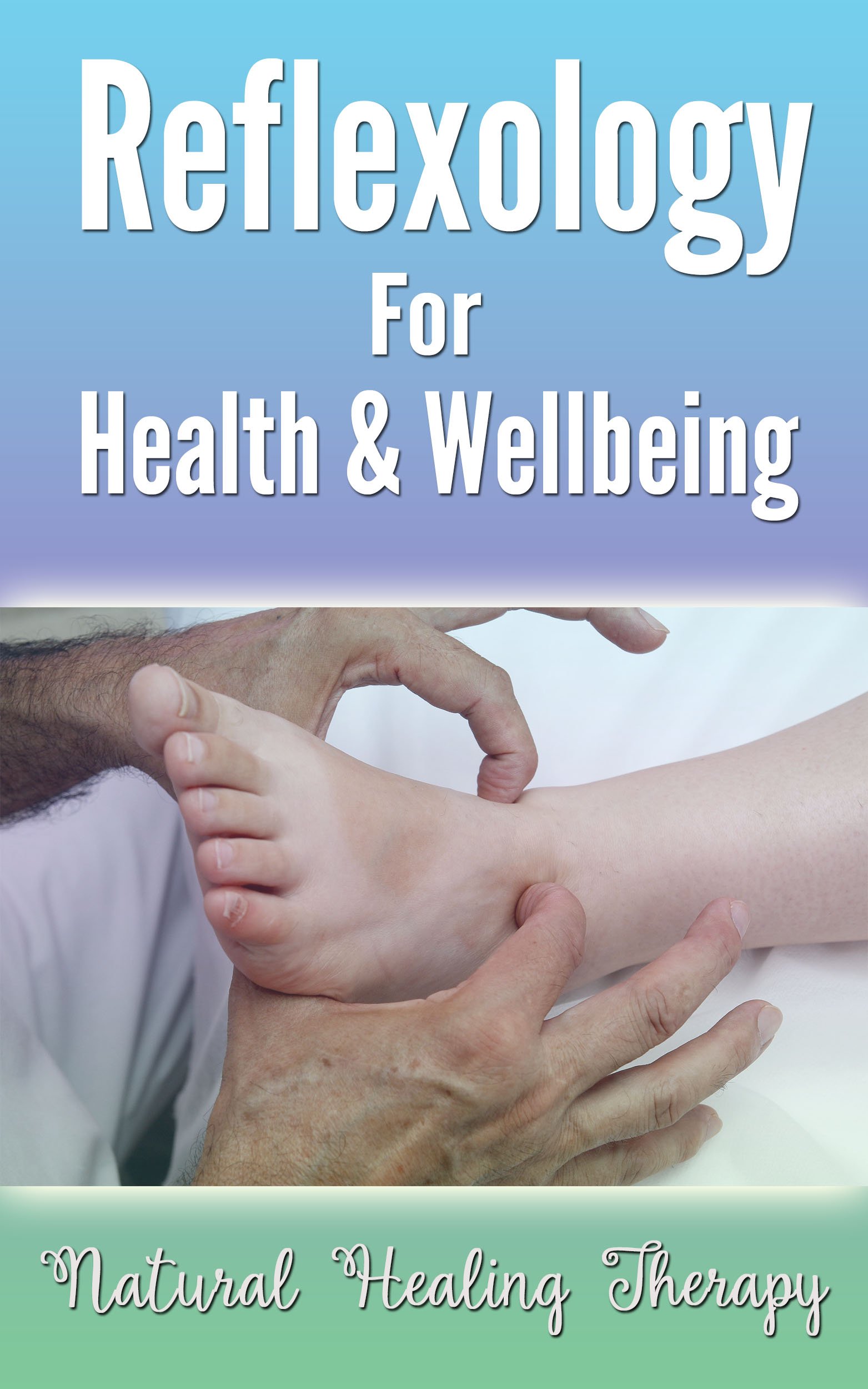
Reflexology for Health and Wellbeing
A 23-page illustrated companion guide exploring foot and hand techniques, traditional pressure-point concepts, relaxation, practitioner approaches, and practical examples of applying reflexology methods.
Full-Color Reflexology Foot Map
A one-page visual reference showing the traditional reflex areas of both feet and their commonly associated body regions.
Who This Collection Is For
This package may be useful for:
- Beginners curious about reflexology
- People interested in complementary wellness practices
- Massage and bodywork enthusiasts
- People considering their first professional reflexology session
- Anyone looking for a relaxation-focused self-care activity
- Readers interested in traditional energy and zone-based wellness systems
Frequently Asked Questions
Is this a professional reflexology certification course?
No. This is an introductory educational collection for personal learning. It does not qualify the reader to diagnose conditions, provide medical treatment, or represent themselves as a licensed or certified healthcare professional.
Does the collection include a reflexology chart?
Yes. You will receive a separate full-color foot map showing the traditional reflex areas of both feet.
Does it cover both foot and hand reflexology?
Yes. The primary focus is foot reflexology, but the companion guide also introduces hand reflexology concepts and techniques.
Does it explain how to choose a reflexologist?
Yes. The main guide discusses booking an appointment, questions to ask a practitioner, and considerations before treatment.
Can reflexology replace medical care?
No. Reflexology is generally considered a complementary wellness practice. It should not replace diagnosis, medication, emergency treatment, or care from a qualified healthcare professional.
Can everyone practice reflexology?
Not necessarily. People who are pregnant, have diabetes, poor circulation, blood-clotting concerns, recent injuries, infections, open wounds, severe foot problems, or other significant medical conditions should consult an appropriate healthcare professional before beginning.
Is this a physical product?
No. This is a virtual downloadable collection. Nothing will be shipped through the mail.
How will I receive the downloads?
After checkout, you will receive an email containing your download information. You can also access your purchased files anytime from the Downloads section of your JoesMind.com customer account.
Take the First Step Into Reflexology
You do not need to become a professional practitioner to appreciate the history, techniques, and relaxation-centered traditions of reflexology.
Begin with two illustrated guides and a clear foot map that help make this traditional wellness practice easier to understand.
This material is provided for general educational purposes only and is not medical advice. Reflexology has not been established as a cure or treatment for disease and should not replace care from a qualified medical professional. Do not delay or discontinue medical treatment based on information in these downloads.

Discover more from Jepsen Mindset and Meditation Monk
Subscribe to get the latest posts sent to your email.
What’s Your Body Trying to Tell You?
Feeling tired, sluggish, bloated, or just not quite like yourself?
Sometimes it helps to stop guessing and take a closer look at your everyday wellness habits, nutrition, energy, and goals.
Take this FREE 2-minute Health Check and get recommendations based on your answers and what you want to improve.
No complicated forms. No pressure. Just a quick way to get a little more clarity about where you are—and what you may want to explore next.
Real Questions
Personalized Suggestions
ZERO Cost to You
A couple of minutes could give you a better idea of where to start.