
10 Smarter Ways to Biohack Your Diet Without Nutrition Hype

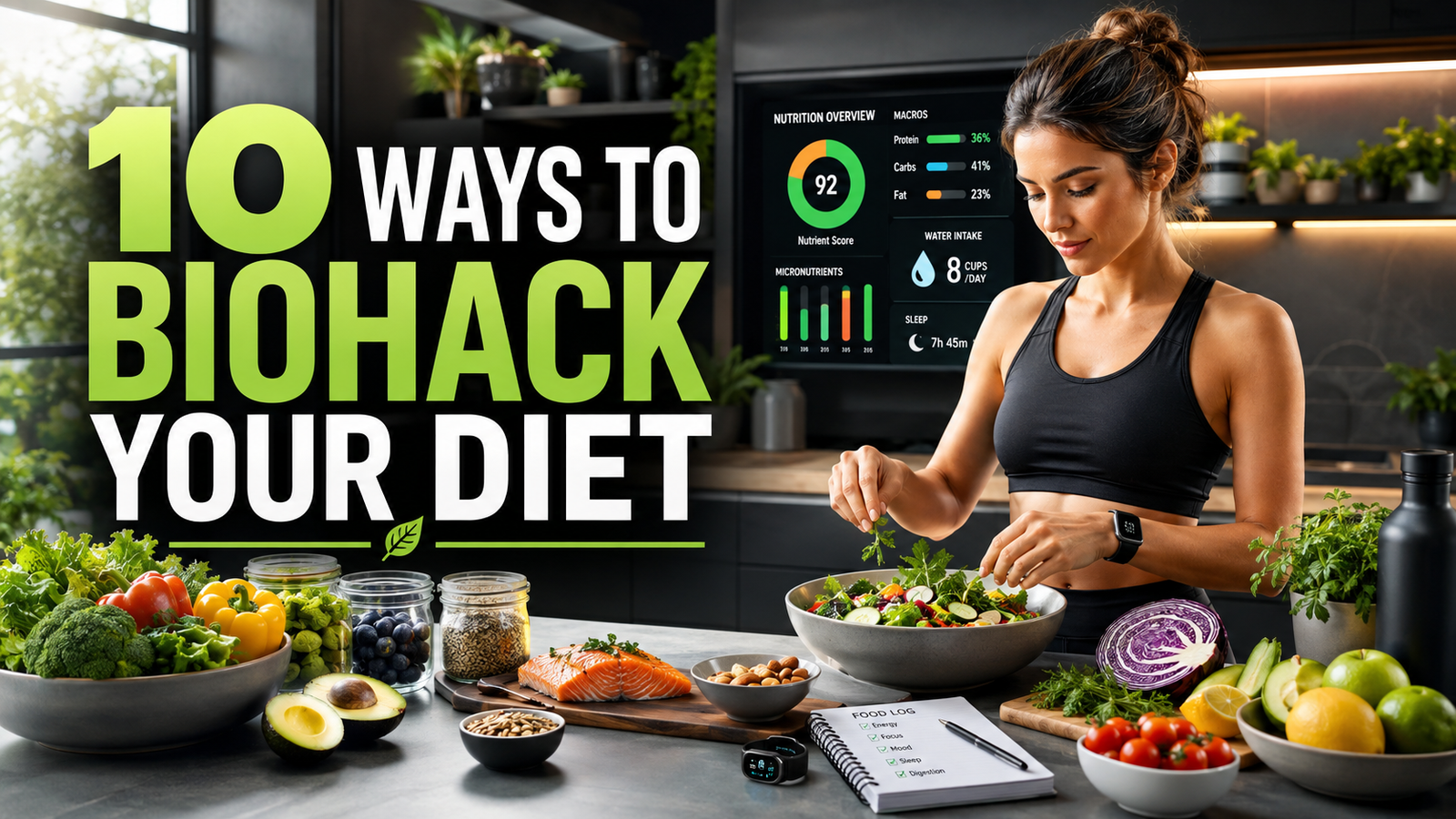
Biohacking sounds futuristic, but when it comes to food, I think the useful part is pretty simple: pay attention, experiment intelligently, and notice what actually helps you feel and function better.
Dave Asprey helped popularize modern biohacking through Bulletproof Coffee and the Bulletproof Diet. Some of his ideas are useful. Others turn one person’s dietary philosophy into rules that simply do not make sense for everybody.
I am all for self-experimentation. I am not for treating nutrition hype as biological law.
If you are new to the idea, start with my guide to how to start biohacking, which focuses on sleep, food, movement, and changing one thing at a time.
The current Dietary Guidelines for Americans emphasize whole, nutrient-dense foods such as vegetables, fruits, whole grains, protein foods, healthy fats, and dairy if you use it. That gives us a much better starting point for biohacking than a long list of foods everybody is supposedly required to fear.
1. Cut Back on Added Sugar, Not Every Source of Sugar
This is one place where the original biohacking advice had the right general idea. Added sugar is easy to overdo, especially through soda, sweetened coffee drinks, candy, desserts, and heavily sweetened packaged foods.
But there is a big difference between added sugar and the naturally occurring sugars in whole fruit. A bowl of berries brings fiber, water, vitamins, and other nutrients along with the sugar. A bottle of soda does not.
A useful experiment is to cut back on the obvious sources of added sugar for a few weeks and pay attention to your energy, hunger, cravings, and how you feel between meals.
2. Eat More Vegetables—and More Variety
You do not need an arbitrary rule that says you must eat 6 to 11 servings of organic vegetables every day. You also do not need to buy organic produce for vegetables to count.
What matters more is variety and consistency. Broccoli, spinach, peppers, carrots, cabbage, asparagus, tomatoes, greens, squash, and whatever else you actually enjoy eating can all contribute something different.
One of the easiest dietary “hacks” is simply to look at your plate and ask whether vegetables are showing up often enough. If not, start there before worrying about exotic powders or complicated protocols.
3. Choose Whole Grains Unless You Have a Reason to Avoid Them
The old version of this article recommended eliminating grains and gluten altogether. I would not give that advice today.
Whole grains can provide fiber and useful nutrients, and current federal dietary guidance includes them as part of a healthy eating pattern. Gluten is a different issue. People with celiac disease need to avoid gluten, and some people may have other medically identified reasons to limit it. But gluten is not automatically harmful to everybody.
And one factual correction is worth making: oats are not naturally a gluten-containing grain. The FDA identifies wheat, rye, and barley as the major gluten-containing grains. Oats can become contaminated with gluten during growing or processing, which is why people with celiac disease may specifically choose oats labeled gluten-free.
4. Eat Whole Fruit Without Being Afraid of Fruit
Fruit does not need to become another food category to fear. Whole fruit is very different from juice, candy, or a sweetened snack that happens to have a picture of fruit on the package.
Berries are a great choice, but so are apples, oranges, peaches, bananas, melons, and many other fruits. Rather than forcing yourself to stay under some universal fruit ceiling, pay attention to the whole pattern of what you eat and how different foods work for you.
5. Favor Minimally Processed Foods Without Pretending All Processing Is Bad
“Processed” has become one of those words that gets thrown around as though it means poisonous. It does not.
Frozen vegetables are processed. Plain yogurt is processed. Canned beans are processed. Peanut butter is processed. The more useful distinction is between foods that remain reasonably close to their original form and heavily processed products that are easy to overeat and may be high in added sugars, sodium, or saturated fat.
The American Heart Association’s current guidance similarly emphasizes whole and minimally processed foods over ultraprocessed foods.
6. Choose Quality Protein From More Than One Source
Grass-fed meat and wild-caught seafood can certainly be part of your diet if you enjoy them and they fit your budget. They are not the only respectable sources of protein.
Fish, poultry, eggs, dairy, beans, lentils, peas, nuts, seeds, tofu, and lean meats can all play a role. Instead of chasing one supposedly perfect protein, build enough variety that your diet is practical, satisfying, and nutritionally useful.
7. Put Legumes Back on the Menu
The original article told readers to eliminate beans, peas, lentils, and peanuts because they were supposedly low in nutritional value and interfered with protein absorption. That was too sweeping.
Legumes can provide protein, fiber, vitamins, minerals, and a lot of staying power for the calories. They are also included among healthy protein choices in current heart-health guidance.
The old article also connected legumes themselves with BPA. That mixed up the food with the packaging. BPA has historically been used in some food-contact materials; it is not something naturally lurking inside a lentil waiting to get you.
8. Choose Healthy Fats Without Making Saturated Fat the Main Event
Your body does need fat. That does not mean 50 to 70 percent of your calories should come from fat or that most of it should be saturated fat.
Olive oil, nuts, seeds, avocado, and fish are useful sources of unsaturated fats. Butter, fatty meats, cheese, and other sources of saturated fat can fit into many diets, but they do not need to become the foundation of your calorie intake.
Current American Heart Association guidance specifically recommends choosing sources of unsaturated fats in place of sources of saturated fat. That is a much more sensible rule than trying to turn saturated fat into a dietary superhero.
9. Use Supplements to Fill a Real Need
I still like one principle from the original article: food first.
Supplements can be useful when there is a real reason for them, but a bottle should not substitute for a decent diet. The NIH Office of Dietary Supplements notes that supplements can help people get adequate amounts of some nutrients, but they cannot replace the variety of foods that make up a healthy eating routine.
Blood testing can sometimes help identify a deficiency when a qualified professional thinks testing is appropriate. Symptoms by themselves are not a reliable way to diagnose which nutrient you supposedly need. If you are taking medications, have a health condition, or are considering high-dose supplements, it is worth discussing that with a qualified health professional.
10. Cook Your Food in Ways You Enjoy—and Don’t Burn the Daylights Out of It
You do not need to eat everything raw to get nutrition from your food. Steaming, roasting, baking, sautéing, simmering, and grilling can all have a place in a healthy diet.
There is, however, a reasonable point behind the old warning about badly charred meat. The National Cancer Institute explains that high-temperature cooking of meat can form chemicals called HCAs and PAHs, particularly with prolonged high heat, open flames, smoke, and charring. That is not the same as saying every browned piece of food is dangerous. It is simply another reason not to make “burn it black” your preferred cooking method.
The Most Useful Biohack: Change One Thing and Pay Attention
If you change your breakfast, eliminate sugar, start taking three supplements, give up bread, begin fasting, and double your vegetables all on Monday morning, you have no idea which change actually made the difference.
Change one meaningful thing. Give it enough time to notice what happens. Pay attention to your hunger, energy, digestion, sleep, mood, and how easy the change is to live with. Keep a journal or a simple note on your phone if that helps you see patterns.
This is the same basic philosophy I recommend with other meaningful lifestyle changes: make the next useful change, observe the result, and adjust instead of trying to become a completely different person overnight.
And remember that listening to your body does not mean diagnosing every symptom yourself. If something significant or persistent is going on, get qualified help.
Biohacking should make you more conscious about your choices—not more frightened of food.
Want a Simpler Starting Point?
If turning every meal into a biohacking experiment sounds exhausting, start with the basics. JoesMind’s free Healthy Eating resource can help you build better food choices around habits you can actually live with.
Discover more from Jepsen Mindset and Meditation Monk
Subscribe to get the latest posts sent to your email.
What’s Your Body Trying to Tell You?
Feeling tired, sluggish, bloated, or just not quite like yourself?
Sometimes it helps to stop guessing and take a closer look at your everyday wellness habits, nutrition, energy, and goals.
Take this FREE 2-minute Health Check and get recommendations based on your answers and what you want to improve.
No complicated forms. No pressure. Just a quick way to get a little more clarity about where you are—and what you may want to explore next.
Real Questions
Personalized Suggestions
ZERO Cost to You
A couple of minutes could give you a better idea of where to start.