Reflexology Tips for Beginners: A Safe, Simple Guide

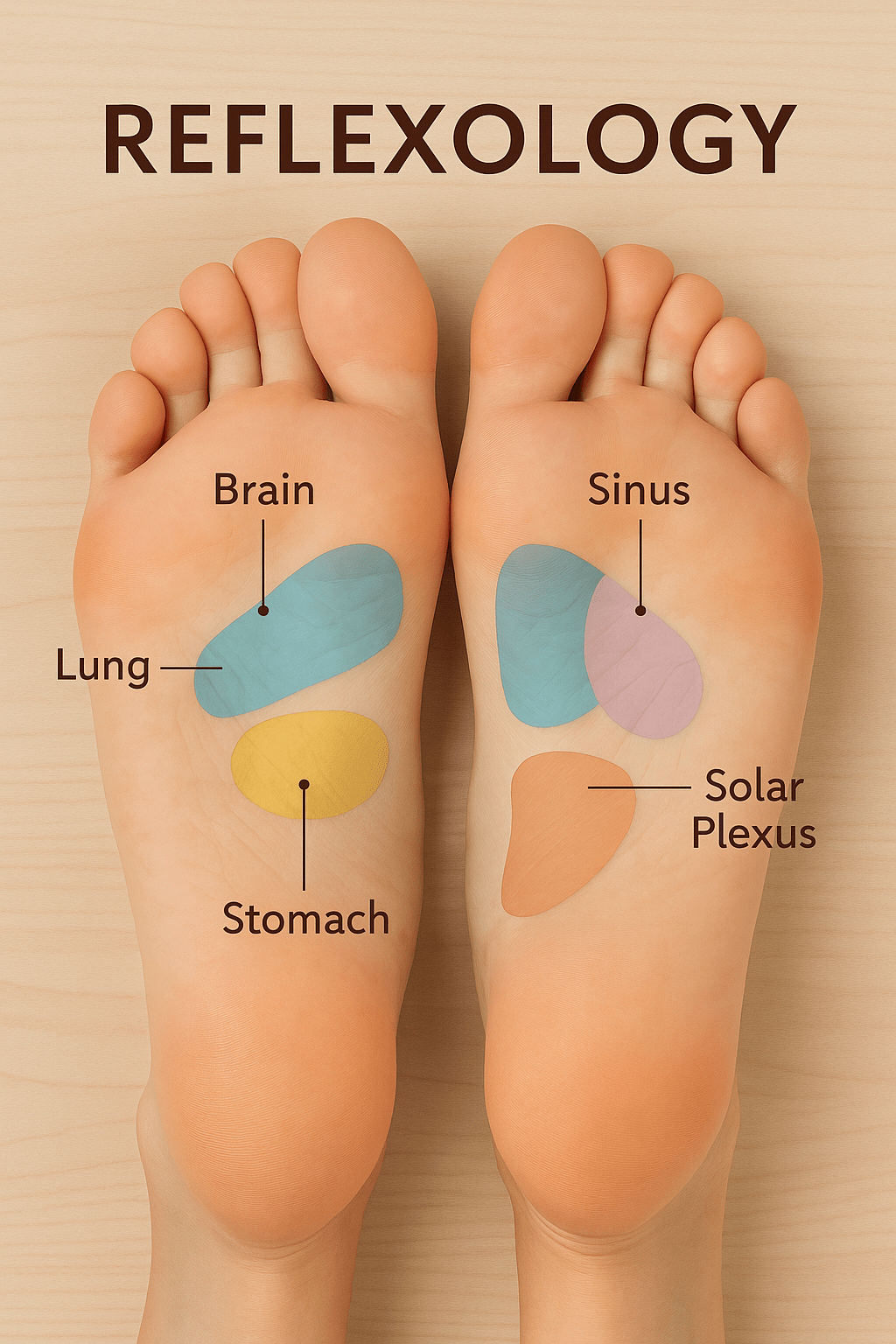
Reflexology can seem complicated when you first look at a chart filled with lines, labels, and points. Fortunately, you do not need to memorize every traditional zone before exploring it as a personal relaxation practice.
Reflexology involves applying pressure to areas of the feet or hands that practitioners traditionally associate with other parts of the body. Some people enjoy the focused touch and quiet attention of a session, but the claim that pressing a particular point heals a corresponding organ has not been proven.
A responsible beginner practice therefore starts with a modest goal: comfort, relaxation, and mindful self-care—not diagnosing an illness or treating a medical condition.
What Reflexology Is—and What It Is Not
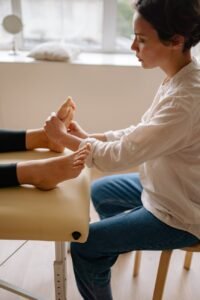
Reflexology uses varying amounts of pressure on the feet or hands. Practitioners follow traditional charts that divide these areas into zones associated with different parts of the body.
You can appreciate the tradition without treating the chart as an anatomical map. A tender spot on your foot does not diagnose a problem with the organ printed beside it, and pressing that spot should not be expected to cure a condition.
Think of the chart as a framework for a focused touch practice rather than a medical diagnostic tool. For more background on the tradition and its limits, read What Is Reflexology?
Begin With Relaxation, Not a Symptom
The safest way to begin is not by trying to cure a headache, reduce blood pressure, change hormone levels, or correct a particular health problem.
Begin with a simple intention such as:
- I want to spend ten quiet minutes caring for myself.
- I want to relax my hands or feet.
- I want to notice where I am holding tension.
- I want to practice being present with my body.
This keeps the experience grounded in something you can honestly observe. You may feel calmer or more comfortable afterward, but that does not prove a specific organ or medical condition has changed.
Choose Your Hands or Feet
Foot reflexology may feel more immersive, but it requires a comfortable position and enough mobility to reach your feet. Hand reflexology is often easier to practice while sitting at a desk, resting on a couch, or taking a short break.
There is no need to practice on both your hands and feet during the same session. Choose the area that is comfortable and accessible.
How Much Pressure Should You Use?
Reflexology should not require you to endure sharp pain. Begin with light pressure and increase it only until the contact feels firm but comfortable.
You may notice tender areas, but tenderness is not proof that a corresponding organ is unhealthy. Reduce the pressure if you tense, hold your breath, pull away, or feel sharp pain.
More pressure does not mean more benefit. Gentle, steady contact is enough for a beginner practice.
A Simple Beginner Foot Routine
- Sit in a supported position where you can reach one foot without straining.
- Warm the foot by gently rubbing the sole, heel, toes, and top of the foot.
- Slowly rotate the ankle within a comfortable range.
- Use your thumb to make small, gentle movements across the sole.
- Pause briefly on areas that feel pleasant or mildly tender, without forcing pressure.
- Gently rub each toe and the area beneath the toes.
- Finish with several slow strokes from the heel toward the toes.
- Repeat on the other foot if desired.
Three to five minutes per foot is enough for a first session. The purpose is to create a comfortable pause, not to force a physical response.
A Simple Beginner Hand Routine
- Rest one hand comfortably in your lap.
- Rub the palm and back of the hand to warm the area.
- Gently rotate the wrist and open and close the fingers.
- Use the opposite thumb to make small circles across the palm.
- Massage each finger from its base toward the fingertip.
- Gently squeeze the fleshy areas of the palm without pressing into pain.
- Finish by slowly rubbing the entire hand.
- Repeat on the other side.
This routine is intended for relaxation and body awareness. It should not be presented as a treatment for nausea, menstrual pain, heart conditions, or another medical problem.
Some pressure-point techniques commonly discussed online—such as pressing the web between the thumb and index finger or a point near the inner wrist—come from acupressure traditions rather than reflexology. Keeping the practices distinct helps you understand what you are actually trying.
What the Research Says About Self-Reflexology
Research into reflexology remains mixed. Some small studies report improvements in subjective experiences such as stress, fatigue, mood, or comfort, while other studies find little difference from comparison treatments.
A systematic review of self-administered foot reflexology found that the available research was too limited and methodologically weak to support firm conclusions about treating chronic health conditions.
The National Center for Complementary and Integrative Health likewise states that reflexology’s claims about healing corresponding body parts have not been proven.
This means a person may find the practice relaxing without that experience proving that reflexology changes organ function or treats disease. For a closer look at pain-related studies, see Reflexology for Chronic Pain: What the Evidence Says.
What Reflexology Has Not Been Shown to Do
Reflexology has not been proven to:
- Detoxify the body
- Repair damaged cells
- Improve the function of internal organs
- Increase oxygen delivery throughout the body
- Prevent urinary tract infections
- Correct hormonal or adrenal problems
- Improve cognitive or nerve function
- Slow the progression of cancer
Reflexology research involving people with cancer has examined certain symptoms and quality-of-life measures. It has not shown that reflexology slows or treats the cancer itself.
Practice Safely
Stop if the practice causes sharp pain, increasing discomfort, numbness, dizziness, or another concerning reaction.
Do not press directly on an injury, open wound, inflamed area, or painful skin condition. Seek appropriate medical evaluation for unexplained, severe, new, or worsening symptoms rather than trying to treat them through a reflexology chart.
Reflexology should complement—not replace—medical care. Tell your healthcare provider about complementary approaches you use, especially when you are receiving treatment for an ongoing condition.
Keep a Simple Practice Record
After a session, write down:
- How long you practiced
- Whether the pressure felt comfortable
- Your level of relaxation before and after
- Whether any benefit lasted
- Any soreness or unwanted reaction
This helps you decide whether reflexology is genuinely useful to your routine without assuming that every sensation has a medical meaning.
Let Curiosity Be Your Starting Point
Reflexology does not need dramatic healing claims to become a meaningful self-care practice.
A few quiet minutes of gentle touch may help you slow down, reconnect with your body, and create a calming pause in your day. You may enjoy it, or you may decide another relaxation practice suits you better.
Stay curious, keep the pressure comfortable, and remain honest about what you experience. The purpose is not to force your body to change. It is to give yourself a moment of patient, attentive care.
Ready to explore reflexology with a more structured beginner resource? The Reflexology Starter Collection provides introductory guidance, traditional charts, and practical self-care material to help you learn at your own pace while maintaining realistic expectations about what reflexology can and cannot do.
Discover more from Jepsen Mindset and Meditation Monk
Subscribe to get the latest posts sent to your email.
What’s Your Body Trying to Tell You?
Feeling tired, sluggish, bloated, or just not quite like yourself?
Sometimes it helps to stop guessing and take a closer look at your everyday wellness habits, nutrition, energy, and goals.
Take this FREE 2-minute Health Check and get recommendations based on your answers and what you want to improve.
No complicated forms. No pressure. Just a quick way to get a little more clarity about where you are—and what you may want to explore next.
Real Questions
Personalized Suggestions
ZERO Cost to You
A couple of minutes could give you a better idea of where to start.