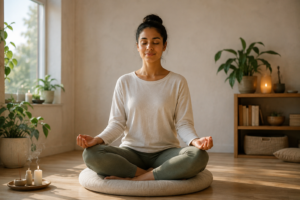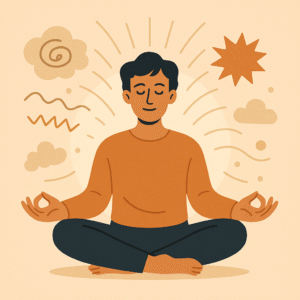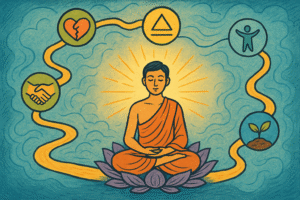
Meditation Facts and Myths: 8 Things Beginners Should Know

Meditation has picked up a lot of baggage over the years. Some people picture monks sitting in silence for hours. Others assume meditation means completely shutting off your thoughts. And plenty of people have heard claims that meditation can fix almost anything that happens in the mind or body.
None of those ideas gives you a very useful place to begin.
Meditation is much simpler. At its heart, meditation means awareness. You notice where your attention has gone, become more conscious of what is happening within you, and learn to return your attention deliberately.
There are many ways to do that, and there is no single technique that everybody has to follow.
So before worrying about whether you are doing meditation right, here are eight facts that can clear away some of the confusion.
8 Meditation Facts Beginners Should Know
1. Meditation Is Not Just One Technique
Meditation is a broad family of practices rather than one rigid method. Some practices use the breath. Others use a mantra, prayer, sound, image, body sensation, or simple awareness of the present moment.
Focused-attention meditation asks you to place your attention on one object and return to it when your mind wanders. I have always liked thinking of this a little like looking through a microscope. You narrow your attention so you can see more clearly what is actually happening.
Other practices are more open. Instead of staying with one object, you notice thoughts, sensations, emotions, and sounds as they arise without immediately chasing after them.
You do not need to master all of these approaches. You need a place to begin. If you want the complete process, my seven-step guide to meditation walks through it in more detail.
2. Meditation Can Be Spiritual or Secular
Meditation can be spiritual without belonging to one particular religion.
Many meditation traditions have deep religious and spiritual roots, and I personally value meditation as far more than a relaxation exercise. It can help you become aware of your inner conversation, your assumptions, your relationship with yourself, and the state from which you are approaching life.
But you do not have to accept a particular theology to meditate.
Meditation is also not a science. It is a practice that science can study. Researchers have examined meditation and mindfulness for stress, anxiety, depression, pain, sleep, attention, and other areas of health. Some findings are encouraging, while others are mixed.
There is no need to exaggerate what meditation can do. Its value does not depend on turning it into a miracle cure.
3. You Do Not Have to Stop Thinking
This may be the most useful meditation fact for a beginner: thoughts are not proof that you are failing.
Your mind thinks. That is what minds do. Meditation does not require you to wrestle every thought into silence.
The practice is noticing that your attention has wandered and choosing to return it. You may return to your breath, a mantra, a prayer, an image, or simply the awareness of being here now.
That return is not an interruption of meditation. That return is meditation.
4. Mindfulness and Meditation Are Related, but Not Identical
Mindfulness is the practice of paying attention to what is happening in the present moment with greater awareness. Meditation is one way to develop that ability, but mindfulness can also be practiced while walking, eating, listening, washing dishes, or having a conversation.
In mindfulness meditation, thoughts and sensations can come and go without requiring you to act on every one of them. You notice what is there and practice allowing it to be present without turning each thought into a command.
That space can be surprisingly powerful. It gives you a chance to respond instead of automatically reacting.
5. Five Minutes Is a Perfectly Reasonable Beginning
You do not have to meditate for twenty minutes, an hour, or any other magic number before the practice counts.
Five minutes is a perfectly reasonable place to begin. So is three minutes. If one quiet minute is what you can honestly return to every day, start there.
Consistency matters more than creating an impressive routine that you dread. Once meditation becomes familiar, you can stay longer if you want to.
If keeping the habit going is harder than starting it, read How to Meditate Consistently Without Overcomplicating It.
6. Meditation Has Real Benefits, but It Is Not a Cure-All
Meditation and mindfulness have been studied for stress, anxiety, depression, pain, sleep, blood pressure, and other concerns. The National Center for Complementary and Integrative Health notes that some research is encouraging while the strength and quality of evidence vary.
That is a much healthier way to think about meditation than promising that it can fix everything.
Meditation may support your well-being. It may help you relate differently to stress, thoughts, emotions, or discomfort. But it is not a substitute for appropriate medical or mental-health care when that care is needed.
If you want a closer look at what the research does and does not support, read Health Benefits of Meditation: What It Can Really Do for You.
7. Meditation Is Usually Low Risk, but It Is Not Comfortable for Everyone
Meditation is often presented as if it automatically makes everyone feel peaceful. Real life is not quite that tidy.
Some people notice anxiety, sadness, difficult memories, or uncomfortable sensations more strongly when they become quiet. That does not mean they are weak or doing the practice incorrectly.
If a particular meditation consistently makes you feel worse, change the practice. Open your eyes. Shorten the session. Try walking, grounding, guided meditation, or another approach. If difficult experiences continue or become overwhelming, qualified professional support may be appropriate.
For readers using meditation specifically for stress or anxiety, Meditation for Stress and Anxiety: 7 Gentle Practices offers several ways to experiment without forcing one technique.
8. The Best Meditation Is One You Can Actually Return To
Which meditation technique is best?
There is no universal answer. One person may love a mantra. Another may prefer the breath. Someone else may connect more deeply through prayer, visualization, walking, or quiet awareness.
The useful question is not, “What is the perfect meditation?” It is, “What practice helps me become more aware, present, and deliberate, and can I return to it consistently?”
Do not turn meditation into another contest with yourself.
A Simple Way to Begin
If you have never meditated before, try this:
- Sit in a position that feels reasonably comfortable.
- Let your breathing remain natural.
- Choose one simple place for your attention, such as the sensation of breathing.
- When you notice that your mind has wandered, acknowledge it without making a problem out of it.
- Bring your attention back.
- Continue for a few minutes.
That is enough for a beginning.
You do not have to manufacture inner peace on command. You are practicing the ability to notice where you are and choose where you place your attention next.
Meditation Is a Practice of Returning
The deeper value of meditation is not that you become a person who never gets distracted, worried, irritated, or pulled into an old mental habit.
You become more aware of when it happens.
And awareness gives you a choice.
You can return to the breath. Return to the present. Return to prayer. Return to the assumption you want to live from. Return to peace. Then, when the mind wanders again, you can return again.
That is why I see meditation as both practical and spiritual. The practice gives you a place to remember that your attention does not have to belong permanently to whatever thought happens to be loudest.
If you are ready to move from learning about meditation to actually beginning a practice, explore A Beginner’s Guide to Meditation. It gives you a practical starting point for understanding meditation and developing a practice without making the process more complicated than it needs to be.
Discover more from Jepsen Mindset and Meditation Monk
Subscribe to get the latest posts sent to your email.
What’s Your Body Trying to Tell You?
Feeling tired, sluggish, bloated, or just not quite like yourself?
Sometimes it helps to stop guessing and take a closer look at your everyday wellness habits, nutrition, energy, and goals.
Take this FREE 2-minute Health Check and get recommendations based on your answers and what you want to improve.
No complicated forms. No pressure. Just a quick way to get a little more clarity about where you are—and what you may want to explore next.
Real Questions
Personalized Suggestions
ZERO Cost to You
A couple of minutes could give you a better idea of where to start.