How to Prepare for Food Shortages Without Panic or Hoarding

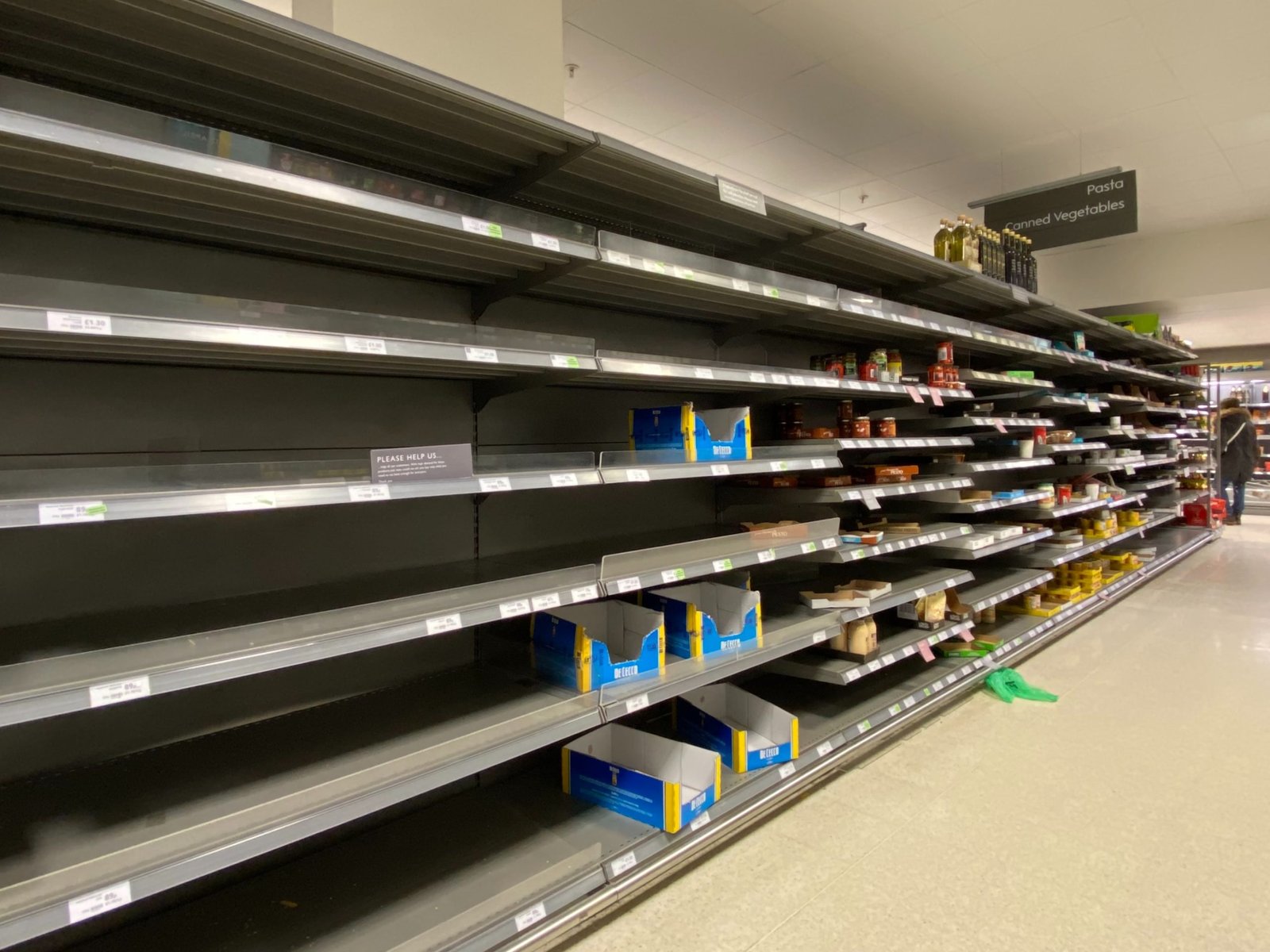
Editor’s Note: I originally wrote this article in March 2020, when COVID-19 panic buying left grocery-store shelves looking like the end of civilization had arrived.
Some of my original nutrition advice has not aged nearly as well as the larger lesson, so I have updated it.
What has not changed is this: empty shelves can make people do irrational things. Preparation helps. Hoarding does not. And keeping a level mind is one of the most useful supplies you can have.
In March 2020, grocery shelves were being stripped faster than stores could restock them. Some people were buying far more than they needed. Others were buying in bulk so they could resell essential items at ridiculous markups to frightened people.
I said then, and I still believe now, that panic buying helps nobody.
At the time, much of what looked like a food shortage was really a sudden spike in buying. Trucks were still moving. Stores were still receiving food. Limits were being placed on certain items because people were grabbing everything in sight.
So there was no need to panic that you were going to die of starvation unless you killed and ate your neighbor.
That joke belonged to 2020. The principle behind it still belongs today.
Empty Shelves Do Not Automatically Mean There Is No Food
A bare shelf can tell you something is hard to find at that moment. It does not automatically tell you why.
Sometimes people have bought three months’ worth of something in three hours. Other times a storm, power outage, transportation problem, local disaster, supply disruption, or other event really has affected access.
The important thing is to find out what is actually happening before reacting to what the shelf looks like.
That is the same mental discipline I wrote about in How to Stay Mentally Strong When Everyone Else Is Losing Theirs. A real problem deserves a real response. Panic is not the same thing as a response.
Build a Pantry Before You Need It
Emergency food storage does not have to be complicated, expensive, or full of foods nobody in your house normally eats.
In fact, the easiest pantry to maintain is mostly made up of things your family already uses.
Ready.gov recommends keeping a supply of nonperishable food for emergencies. You do not have to build that supply in one expensive shopping trip.
Buy one or two extra things you already use when you can afford it. Rotate them into your normal meals. Replace what you use. Over time, you create a buffer without emptying the store shelf or your bank account.
Useful Pantry Staples
- Rice, oats, pasta, and other grains your household actually eats
- Dry or canned beans and lentils
- Canned or shelf-stable protein such as tuna, chicken, beans, or similar foods
- Nut butters, nuts, seeds, and trail mixes
- Canned vegetables, tomatoes, fruit, soups, and broth
- Shelf-stable milk or plant-based alternatives
- Cooking oils, crackers, dried fruit, and other shelf-stable foods you use regularly
Do not build an emergency pantry full of things nobody in your house wants to eat. A can of food is not much of an asset if everybody would rather starve than open it.
Water Deserves Its Own Plan
Food gets most of the attention, but water is more urgent.
The CDC recommends storing at least one gallon of water per person per day for three days, and says that trying to store a two-week supply is worthwhile when practical.
Your emergency supplies should also include the boring things that become very important when something goes wrong: a manual can opener, flashlights, extra batteries, a portable charger, and a basic first-aid kit.
A pantry full of canned food becomes considerably less impressive when the power is out and nobody can open the cans.
Use What You Have Before Buying More
One of the best ways to make food last is not to waste the food you already have.
- Take inventory before shopping.
- Use perishable foods first.
- Know what is hiding in the freezer.
- Move older canned goods to the front.
- Plan meals around what needs to be used.
- Freeze food when that makes sense instead of letting it spoil.
Rationing does not have to mean deliberately undereating. It can simply mean paying attention and not behaving as though the kitchen magically refills itself.
Supplements Are Not a Substitute for Food
When I originally wrote this article, I recommended stocking up on a long list of vitamins and supplements to fill nutritional gaps.
I would not give that advice the same way today.
A supplement may make sense for a particular person who has a known dietary need, deficiency, medical reason, or recommendation from a qualified healthcare professional.
But a handful of capsules does not replace food.
Food gives you energy and a combination of nutrients that supplements do not simply reproduce. If you already use a supplement appropriately, include it with the other personal items you would not want to run out of. Just do not confuse a bottle of vitamins with a stocked pantry.
Do Not Turn a Shortage Into a Weight-Loss Program
I also originally suggested using food shortages as an opportunity for intermittent fasting and weight loss.
I would not recommend that today.
An emergency is a poor time to experiment with prolonged fasting simply to make supplies last longer. The goal is sensible planning, not turning a disruption into a crash diet.
Rice is not your enemy. Neither are oats, beans, pasta, bread, or other shelf-stable foods just because they contain carbohydrates. In an emergency pantry, usefulness, nutrition, storage life, preparation needs, dietary restrictions, and what your household will actually eat all matter.
Prepare With Your Family, Not Just for Your Family
This is one piece of my original advice I would make even stronger.
Talk to the people you live with about what you keep and why.
- What foods will everybody actually eat?
- Does anyone have food allergies or dietary restrictions?
- Are there medications or medical supplies that should be part of the plan?
- Do children need formula or particular foods?
- What do the pets need?
- Does anyone depend on refrigerated medication or other equipment that requires power?
- Does everybody know where the supplies are?
Letting family members have input gives them responsibility and a greater sense of control. Preparedness works better when it is something the household understands together.
Your Pantry Should Reduce Fear, Not Feed It
I still like the idea of keeping a few comfort items with practical supplies.
- Tea or coffee you enjoy
- Dark chocolate or a favorite shelf-stable snack
- A journal and pens
- A favorite book or printed affirmations
- Prayer, meditation, or other grounding materials that matter to you
Emergency preparedness does not require becoming joyless.
Keep your mindset anchors simple: focus on what you can control, stay informed without becoming obsessed, and make decisions from the plan instead of from the latest frightening post on your phone.
The hand-sanitizer shortages of the same period are another good example. I revisited that experience in Should You Make Homemade Hand Sanitizer? What Actually Works.
Then: In March 2020, empty shelves were often the result of sudden panic buying rather than the country literally running out of food.
Now: Different emergencies create different problems. Storms, power outages, transportation interruptions, local disasters, inflation, and other disruptions can all affect access to food. The lesson is not to assume everything is fine. The lesson is to find out what is actually happening and respond proportionately.
Resilience Starts in the Mind and Continues in the Pantry
You cannot control every storm.
You cannot control every supply problem.
You cannot control what somebody else puts in their shopping cart.
But you can prepare.
You can keep useful food in the house.
You can store water.
You can make a plan with your family.
You can use what you have instead of wasting it.
You can help somebody else when you genuinely have enough to share.
And you can refuse to let an empty grocery shelf convince you that civilization has ended.
Preparation gives you options.
Options reduce panic.
And a level mind helps you see the solutions that fear tends to hide.
Prepare. Don’t hoard. Stay flexible.
Once the emergency pantry is handled, the next question is what you do with that food every ordinary day. Healthy Eating offers a practical next step for making more thoughtful food choices when life is not in crisis mode.
Discover more from Jepsen Mindset and Meditation Monk
Subscribe to get the latest posts sent to your email.
What’s Your Body Trying to Tell You?
Feeling tired, sluggish, bloated, or just not quite like yourself?
Sometimes it helps to stop guessing and take a closer look at your everyday wellness habits, nutrition, energy, and goals.
Take this FREE 2-minute Health Check and get recommendations based on your answers and what you want to improve.
No complicated forms. No pressure. Just a quick way to get a little more clarity about where you are—and what you may want to explore next.
Real Questions
Personalized Suggestions
ZERO Cost to You
A couple of minutes could give you a better idea of where to start.