How to Face Your Fears: 5 Gentle Steps Forward


Fear is not proof that you are weak. It is not always proof that you should stop, either.
Fear often appears when something feels uncertain, important, or beyond your control. Sometimes it protects you from danger. Other times it repeats an old warning long after avoidance has begun limiting your life.
The goal is not to become a person who never feels afraid. The goal is to stop giving fear sole authority over your choices.
The Difference Between Courage and Forcing Yourself
Courage is not throwing yourself into the deepest water and hoping panic teaches you to swim.
Courage is choosing a meaningful step that stretches you without ignoring wisdom, safety, or the support you may need.
You do not prove your strength by selecting the most frightening possible challenge. You build strength by completing a step you can learn from, then choosing the next one.
There is a difference between discomfort and danger. A difficult conversation may feel uncomfortable without being unsafe. An abusive situation, genuine threat, or serious medical concern is different. Personal growth never requires you to ignore real danger.
1. Name the Fear and the Choice It Is Controlling
“I am afraid” is honest, but it is still broad. Ask what you believe might happen.
Are you afraid of embarrassment, rejection, physical sensations, failure, conflict, criticism, or losing control?
Then ask a second question:
What choice is this fear making for me?
Perhaps fear keeps you from applying for work, speaking honestly, traveling, meeting people, or trying something new. Naming the choice turns a vague feeling into something you can examine.
You may also notice a common anxiety trigger, such as uncertainty, a physical sensation, a painful memory, or a frightening prediction. The guide to common anxiety triggers and how to respond can help you notice those patterns without blaming yourself.
When the mind predicts disaster, write down what you know and what you are imagining. Challenging negative thoughts in practical steps can help you separate a possibility from a certainty.
2. Steady Yourself Before Taking Action
You do not have to eliminate fear before you act. You do need enough steadiness to make a deliberate choice.
Place your feet on the floor. Notice what is around you. Let your breathing remain comfortable rather than forcing a dramatic deep breath. Relax your shoulders or unclench your hands.
Use self-talk you can honestly believe:
I can feel fear and still take one wise step.
This is not a promise that everything will feel easy. It is a reminder that fear and choice can exist at the same time.
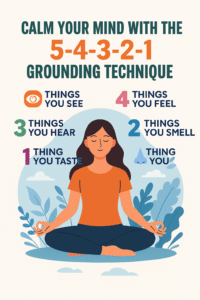
When anxiety becomes so loud that you cannot think clearly, use What to Do When Anxiety Hits: 7 Ways to Steady Yourself. Grounding or breathing does not have to create perfect calm. It only needs to create enough room for a thoughtful response.
Remember past moments of courage too. You have already adapted to changes, learned unfamiliar skills, and survived days you once doubted you could handle. Fear does not tell the whole story about your ability.
Change the Story Fear Keeps Telling You
Fear does not only tell you that something might go wrong. If you listen to it long enough, it can start telling you something about who you are.
“I can’t handle this.”
“I’m not confident enough.”
“I’m just not the kind of person who can do that.”
There is a big difference between saying, “I feel afraid of this,” and deciding, “I am a fearful person.” One describes what you are feeling right now. The other turns fear into part of your identity.
Pay attention to the story going around and around in your head. Write it down if you need to. Then look for the evidence that the story is incomplete. Think about difficult things you have already handled, times you learned something you once thought you couldn’t do, and moments when you moved forward before you felt completely ready.
You do not have to convince yourself that you are fearless.
A much more believable place to begin may be:
I can feel afraid and still take the next step.
3. Make the Step Smaller
Fear often presents only two options: avoid the situation or face the hardest version immediately. That is a false choice.
A smaller step can still be courageous.
Someone afraid of public speaking might record a one minute message, speak to one trusted person, then contribute in a small group. Someone anxious about social situations might begin by saying hello to a neighbor rather than attending a crowded event.
Someone who has avoided driving might sit in a parked car, drive around the block, then take a familiar road with a trusted person. The right sequence depends on the person, the fear, and whether the activity is genuinely safe.
Create a simple fear ladder:
- Write down one situation you have been avoiding.
- List five possible steps from least difficult to most difficult.
- Rate each step from zero to ten.
- Begin with something around a three or four, not a nine or ten.
- Make the step specific enough that you know when it is complete.
A gradual approach helps you gather experience instead of only imagining what might happen. It also gives you a chance to adjust the plan.
This is not an instruction to conduct your own clinical exposure therapy. Severe phobias, panic, trauma related fears, obsessive compulsive patterns, or highly restrictive avoidance may require a plan developed with a qualified professional.
4. Bring the Right Support
You do not receive extra credit for facing every fear alone.
A trusted friend can encourage you and remind you of the plan when anxiety starts rewriting the rules. A support group may help you feel less isolated. A qualified professional can help when the fear is intense or connected to trauma.
Choose support carefully. The right person does not shame you, push you into a step you did not agree to, or make every decision for you. Good support respects both your courage and your limits.
Another person might watch you practice speaking, accompany you to an appointment, or wait nearby while you complete a task. The purpose is support that helps you learn from the experience.
Asking for help is not surrendering personal responsibility. It is often a wise expression of it.
5. Review What Happened and Choose the Next Step
After you take a step, do not ask only, “Was I afraid?”
You may have felt fear and still completed the action. That matters.
Ask:
- What did I predict would happen?
- What actually happened?
- What did I handle better than expected?
- What was genuinely difficult?
- What would make the next step wise and manageable?
Be honest without turning the review into punishment. Perhaps the step was too large or needed more preparation. Perhaps it went better than expected but still felt uncomfortable. All of that is useful information.
Celebrate the act of participation, not only the disappearance of anxiety. Confidence often grows after repeated action. It does not always arrive beforehand to give you permission.
Next, repeat the action, make a small adjustment, or move one level higher on your fear ladder.
Use Gratitude to Widen the Picture
Gratitude does not require you to pretend that the feared situation is pleasant. It keeps that situation from occupying your entire mental horizon.
Name what remains steady, supportive, meaningful, or good. Perhaps someone encouraged you. Perhaps you learned something about yourself. Perhaps you did not complete the entire plan, but you moved farther than before.
Fear may be present, but it is not the only truth present.
A gratitude journal can remind you that life contains more than the problem demanding your attention. Gratitude supports perspective, but it is not a substitute for treatment or practical action.
When Facing Fear Should Not Be a Solo Project
Some fears are too intense, complicated, or deeply connected to trauma for a general article to guide safely. When fear causes recurring panic, severe distress, or major restrictions in work, relationships, travel, health care, or ordinary life, qualified professional support may help you approach it with a plan designed for your situation.
The National Institute of Mental Health explains phobias, cognitive behavioral therapy, exposure based treatment, and other professional options.
New, severe, or unexplained physical symptoms should not automatically be dismissed as anxiety. Appropriate medical evaluation may be needed.
Asking for support does not surrender your personal power. It is one way of using your power responsibly.
Courage Is a Practice
Courage is not a personality trait reserved for a fortunate few. It is a choice practiced in small moments.
You may still feel fear when you take the next step. Take the step with awareness, preparation, and wisdom anyway.
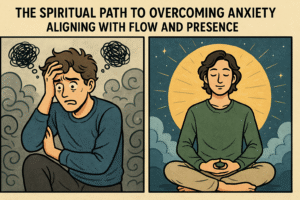
The Spiritual Path to Overcoming Anxiety offers a deeper look at responding from presence rather than allowing fear to control the direction of your life.
Fear can speak. It does not receive the final vote.
Taking one courageous step can loosen fear’s influence, but recurring anxiety often involves thoughts, sensations, and patterns that need more sustained attention. Overcome Anxiety offers focused guidance for responding to those patterns with greater clarity and confidence.
Discover more from Jepsen Mindset and Meditation Monk
Subscribe to get the latest posts sent to your email.
What’s Your Body Trying to Tell You?
Feeling tired, sluggish, bloated, or just not quite like yourself?
Sometimes it helps to stop guessing and take a closer look at your everyday wellness habits, nutrition, energy, and goals.
Take this FREE 2-minute Health Check and get recommendations based on your answers and what you want to improve.
No complicated forms. No pressure. Just a quick way to get a little more clarity about where you are—and what you may want to explore next.
Real Questions
Personalized Suggestions
ZERO Cost to You
A couple of minutes could give you a better idea of where to start.