Breathing Techniques for Anxiety: 3 Gentle Ways to Find Calm


When anxiety rises, your breath is one of the few things you can work with immediately. You do not need special equipment, a perfect setting, or twenty uninterrupted minutes.
But your breath is not a magic switch, and you do not have to force yourself into instant calm. A breathing practice is simply a way to interrupt the momentum, reconnect with the present, and create a little space before your next reaction.
That space matters. Anxiety likes speed. It rushes your thoughts toward the worst possible outcome and makes every sensation feel urgent. A few gentle breaths may not solve the whole problem, but they can help you stop adding more fear to the moment.
How Anxiety Can Change Your Breathing
Anxiety can make breathing faster, deeper, or less steady. When you breathe more than your body needs, the carbon dioxide level in your blood can fall. That may contribute to dizziness, tingling, tightness, breathlessness, or the frightening sensation that something is terribly wrong.
The answer is not to gulp in even more air. Let your breathing become quieter, slower, and easier. Think of it as removing pressure rather than performing a technique perfectly.
New or unexplained difficulty breathing should not automatically be blamed on anxiety. When symptoms are severe, unusual, or medically concerning, seek appropriate medical care.
Why Deeper Is Not Always Better
“Take a deep breath” is common advice, but people often interpret it as “take the biggest breath your lungs can possibly hold.” That can become another form of overbreathing.
Think gentle rather than gigantic. Your abdomen may expand as the diaphragm moves, and your chest may move too. You are not trying to pass a breathing exam. You are giving your body permission to stop rushing.
If you become lightheaded, strained, or more anxious, return to your ordinary breathing. Make the next breath smaller and easier, or stop the exercise altogether. A useful practice should not become another demand you place on yourself.
1. Gentle Diaphragmatic Breathing
Sit or lie in a comfortable position. Place one hand on your upper chest and the other on your abdomen, just above your belly button.
Breathe in gently through your nose. Notice whether the lower hand rises a little as your abdomen expands. Let the breath leave without pushing it out. Your upper chest may move some, and that is fine. The goal is not to keep your chest perfectly still. The goal is to make the breath smooth and comfortable.
Continue for five or six breaths. Do not chase a dramatic feeling of calm. Simply notice that you can breathe without hurrying.
This is a good technique to practice while reasonably calm. Familiarity makes it easier to remember when stress begins climbing.
2. Try a Longer, Easier Exhale
A longer exhale can help slow the pace of breathing without requiring you to hold your breath.
Breathe in comfortably for a count that feels natural. Then breathe out a little more slowly. You might inhale for three counts and exhale for four, but the numbers are not sacred. Use a rhythm that does not leave you gasping or straining.
I do not have to force peace. I can make room for it, one breath at a time.
Repeat the pattern for several breaths, then let your breathing return to normal. The exhale is not an escape hatch from every feeling. It is a gentle reminder that you can soften without surrendering your awareness.
3. Use Adjustable Box Breathing
Traditional box breathing uses four equal parts: inhale, hold, exhale, hold. The familiar pattern is four counts for each part, but that rhythm is not comfortable for everyone.
Start with a shorter count, such as three. Inhale for three, pause for three, exhale for three, and pause for three. When holding the breath feels unpleasant, skip the holds. You can simply inhale for three and exhale for three or four.
The pattern is a guide, not a commandment. Adjust it to your body instead of forcing your body to obey the pattern.
What About the 4-7-8 Breathing Technique?
The 4-7-8 technique uses a four-count inhale, a seven-count hold, and an eight-count exhale. Some people use it as a relaxation practice or part of a bedtime routine.
Those counts may feel too long when you are anxious, short of breath, or new to breathwork. Shorten the counts or choose a technique without breath holding. The dedicated guide to the 4-7-8 breathing technique explains the method in more detail.
A Two-Minute Breathing Reset
Use this short practice when you notice anxiety beginning to build:
- Sit or stand comfortably and let your shoulders drop.
- Breathe in gently through your nose. Do not strain to fill every corner of your lungs.
- Let the breath out a little more slowly than it came in.
- Repeat for several comfortable breaths while thinking, “I can make room for peace, one breath at a time.”
- Ask yourself, “What is the next calm and useful thing I can do?”
That final question matters. Breathing is not meant to keep you sitting still forever. It helps you become steady enough to choose your next action.
What to Do When Breath Awareness Makes Anxiety Worse
Breath-focused exercises do not calm everyone in every moment. When paying attention to your breathing makes you more frightened, stop trying to control it. Let your body breathe normally and turn your attention outward.
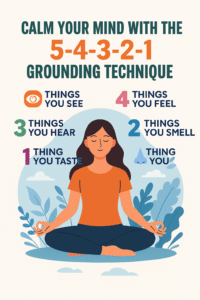
Name what you can see, hear, and physically feel around you. The 5-4-3-2-1 grounding technique gives you a structured way to reconnect with your surroundings.
Grounding is not a lesser technique. It may simply be the better tool for that moment.
Practice During Calm Moments
Do not wait until anxiety is at full volume before you practice. Spend two or three minutes with gentle breathing while sitting on the porch, before meditation, after a walk, or when you first get into bed.
Regular practice helps the technique feel familiar rather than like one more emergency instruction. It also fits naturally with other mindfulness techniques for reducing stress.
Keep the practice simple enough that you will actually use it. A two-minute practice repeated often may serve you better than a complicated routine you abandon after three days.
Breathing Is Support, Not a Test of Willpower
Anxiety returning does not mean you breathed incorrectly. It does not mean you failed spiritually, lacked discipline, or chose the wrong thoughts.
Your breath is one tool among many. Movement, sleep, reduced stimulation, honest self-talk, meditation, therapy, medication, and medical care may all have a place. The article 7 Small Steps to Help You Manage Anxiety places breathing within a broader plan for responding to anxious moments.
The National Center for Complementary and Integrative Health also explains that relaxation techniques can complement appropriate care, rather than replace it.
When Breathing Is Not Enough
Breathing practices can support you, but they are not a replacement for therapy, medication, medical evaluation, or other qualified care when those are needed.
Persistent anxiety, recurring panic, or symptoms that interfere with sleep, relationships, work, travel, or ordinary life deserve proper support. Seeking help is not giving away your power. It can be a conscious way of reclaiming it.
Peace in the Midst of the Storm
Every breath is a small return to the present. Yesterday is no longer being breathed, and tomorrow has not arrived. This breath belongs to now.
You may not be able to command every feeling to disappear, but you can choose how you meet the moment. Breathe gently, reclaim the pause, and take your next step from a little more peace.
Breathing can help you steady an anxious moment, but lasting change may also require understanding the thoughts and patterns that keep reactivating it. Overcome Anxiety offers more focused guidance for responding to anxiety with greater clarity and confidence.
Discover more from Jepsen Mindset and Meditation Monk
Subscribe to get the latest posts sent to your email.
What’s Your Body Trying to Tell You?
Feeling tired, sluggish, bloated, or just not quite like yourself?
Sometimes it helps to stop guessing and take a closer look at your everyday wellness habits, nutrition, energy, and goals.
Take this FREE 2-minute Health Check and get recommendations based on your answers and what you want to improve.
No complicated forms. No pressure. Just a quick way to get a little more clarity about where you are—and what you may want to explore next.
Real Questions
Personalized Suggestions
ZERO Cost to You
A couple of minutes could give you a better idea of where to start.