How to Return to Meditation After a Break


Maybe you used to meditate every morning. Maybe you made it part of your evening routine. Maybe you practiced for a few weeks, felt better for doing it, and then life got busy and meditation quietly disappeared.
Now you are thinking about coming back to it.
Good.
But do not make the mistake of believing you have to start over.
You are not the same person who began meditating the first time. You have lived more life since then. You have had more experiences, more challenges, and more opportunities to discover how your own mind works. Even the fact that you feel drawn back to meditation tells you something.
The practice may have gone quiet for a while. That does not mean everything you learned from it disappeared.
You Are Not Starting Over
One of the easiest ways to make returning to meditation harder is to compare yourself with the person you were when you practiced regularly.
Maybe you used to sit for twenty minutes and now five feels difficult. Maybe your mind seems noisier. Maybe you once looked forward to meditation and now you keep putting it off.
None of that means the practice stopped working or that you somehow failed at meditation.
It means life changed.
And because life changed, your meditation practice may need to change with it.
If you feel rusty and want a simple refresher on the basics, start with How to Meditate: 7 Steps to Peace, Clarity, and Healing. You do not need to remember everything before you sit down again.
Why Meditation Practices Fade
People stop meditating for all kinds of reasons.
- Your schedule changes.
- You travel.
- You get sick.
- Work becomes demanding.
- Family needs more of your attention.
- You miss a few days and then decide you have already ruined the routine.
- You get bored doing the same practice.
- You expect meditation to make every difficult feeling disappear and become discouraged when it does not.
Sometimes there is no dramatic reason at all. You simply stop.
That is why I do not think guilt is useful here. Guilt turns meditation into another obligation hanging over your head. Presence works better.
Notice that you stopped. Notice that you want to return. Then make a conscious choice about what you do next.
Start Smaller Than You Think You Should
If you used to meditate for twenty minutes, you may think twenty minutes is where you are supposed to begin again.
It is not.
Start with the amount of time you are willing to do today.
That may be ten minutes. It may be five. It may be one.
A short practice you actually do is more useful than an impressive practice you keep postponing.
If your problem is mainly finding room in the day, How to Meditate When You’re Busy has several ways to fit meditation into a life that is already full.
Return to the Breath and Body
You do not need a complicated technique to restart.
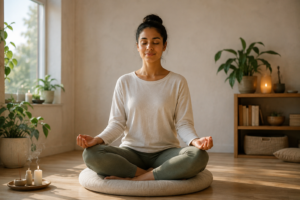
Sit comfortably. Let your body settle. Notice your breathing without trying to force it into a particular rhythm. Feel where your body makes contact with the chair, floor, bed, or cushion.
Your mind will wander.
Of course it will.
When you notice that you have followed a thought, come back to the breath or to the feeling of your body sitting there.
That return is not evidence that you are bad at meditation. The return is the practice.
Meditation and mindfulness have been studied for concerns such as stress, anxiety, sleep, and pain, although the strength of the evidence varies and the practice is not a cure-all. If you want the health side separated from the spiritual and practical side, see Health Benefits of Meditation: What It Can Really Do for You.
Reconnect With Why You Meditated in the First Place
Before you rebuild the habit, ask yourself a more important question:
Why do I want to meditate again?
Maybe you want more peace. Maybe you want to stop reacting so quickly. Maybe you want quiet time with yourself. Maybe meditation helps you feel spiritually centered. Maybe you miss the clarity that comes from sitting still long enough to hear your own thoughts instead of everybody else’s.
For me, meditation has never been only about relaxation. It is also about awareness. When I become aware of what I am thinking, feeling, believing, and choosing, I am in a better position to decide what I want to do with it.
That is part of discovering your inner self.
You are not sitting there to escape your life. You are becoming quiet enough to meet yourself in it.
Build a Practice for the Life You Have Now
The meditation routine that worked three years ago may not fit your life today.
Good. Build a new one.
You might meditate before coffee instead of after. You might use five minutes at lunch instead of twenty minutes in the morning. You might sit in a chair instead of on the floor. You might practice in silence some days and use guided meditation on others.
The point is not to recreate the old ritual perfectly. The point is to create a practice you can return to now.
If consistency has been the difficult part, How to Meditate Consistently Without Overcomplicating It goes deeper into cues, minimum practices, flexible routines, and what to do after you miss a day.
What If Meditation Feels Different This Time?
It probably will.
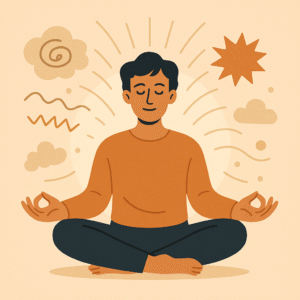
You may feel more restless than you remember. You may notice emotions that were easier to ignore when you stayed busy. You may discover that a technique you once loved no longer fits you.
That does not automatically mean something is wrong.
Approach the difference with curiosity. What are you noticing now that you did not notice before? What does your mind keep returning to? What kind of practice feels supportive rather than forced?
If meditation repeatedly increases distress or brings up experiences that feel difficult to manage on your own, it is reasonable to shorten the practice, try a different approach, or get qualified professional support. Meditation is a tool, not a test you have to pass.
Returning Is Part of the Practice
Returning to meditation is not about proving that you can be as disciplined as you once were. It is about becoming present again.
Start with a minute if that is what fits today. Sit quietly. Notice your breath. Notice your thoughts. Notice yourself.
Then come back tomorrow.
The important thing is not that you never drift away from the practice. The important thing is learning that you can return.
If you want some structure as you rebuild that relationship with meditation, explore Mindful Meditation. It can help you develop the practice more deliberately without turning meditation into another obligation you have to get right.
Discover more from Jepsen Mindset and Meditation Monk
Subscribe to get the latest posts sent to your email.
What’s Your Body Trying to Tell You?
Feeling tired, sluggish, bloated, or just not quite like yourself?
Sometimes it helps to stop guessing and take a closer look at your everyday wellness habits, nutrition, energy, and goals.
Take this FREE 2-minute Health Check and get recommendations based on your answers and what you want to improve.
No complicated forms. No pressure. Just a quick way to get a little more clarity about where you are—and what you may want to explore next.
Real Questions
Personalized Suggestions
ZERO Cost to You
A couple of minutes could give you a better idea of where to start.