What to Do When Anxiety Hits: 7 Ways to Steady Yourself

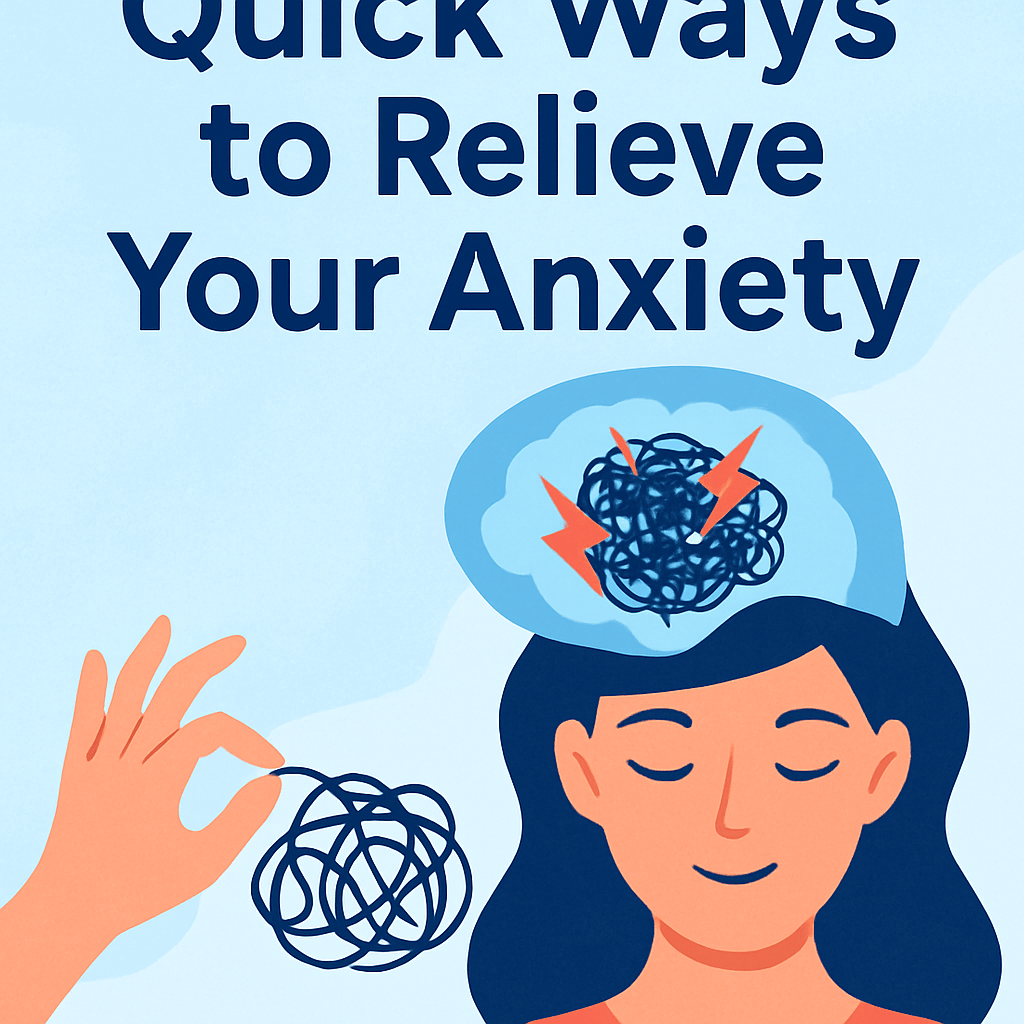
Anxiety has an unpleasant trick: the feeling itself can make you more anxious. Your heart speeds up, your thoughts begin racing, and then your mind reacts to those sensations as proof that something is terribly wrong.
Before long, you are not only anxious about the original situation. You are anxious about being anxious.
You do not need to force that feeling to disappear on command. Your first job is to stop feeding the momentum and create enough space to choose what happens next.
First, Make Sure You Are Physically Safe
Anxiety and panic can bring a racing heart, dizziness, trembling, chest discomfort, and difficulty breathing. Those sensations can be frightening, but they are not always caused by anxiety.
Severe or sudden chest pain, serious difficulty breathing, fainting, or new and unexplained symptoms deserve appropriate medical attention. Do not automatically dismiss them as anxiety.
Once you are reasonably sure you are safe, begin with one simple coping tool.
Choose One Tool, Not All Seven
When anxiety is already loud, a list of seven techniques can feel like seven more things you are failing to do.
Choose one. Give it a little time. When it does not help, try another.
The goal is not to perform anxiety management perfectly. The goal is to find one small opening through which greater steadiness can return.
1. Make Your Body and Surroundings More Comfortable
Begin with the obvious physical things. Sit down when standing feels unsteady. Loosen clothing that feels restrictive. Step away from noise or a crowded room when you can do so safely. Place both feet on the floor and let the chair support your weight.
Comfort does not mean running from every difficult feeling. It means reducing unnecessary strain while your body settles. You do not earn extra strength by making an anxious moment harder than it already is.
2. Name What Is Happening Without Declaring a Disaster
Say what is happening without turning it into a prophecy:
This is anxiety. It is uncomfortable, but I do not have to make every decision while it is speaking this loudly.
You are not agreeing with every frightened thought. You are acknowledging the present moment without adding another argument inside your mind.
Acceptance does not mean liking the feeling or deciding that nothing should change. It means you stop spending all your energy demanding that this moment be different before you can take the next useful step.
3. Let Your Breathing Become Gentler
Do not force the largest breath you can take. Let your inhale remain gentle, then allow the exhale to become slightly slower. Keep the rhythm comfortable rather than turning breathing into another test you must pass.
When focusing on your breathing makes you more uncomfortable, stop controlling it and move to a grounding exercise instead. The right tool is the one that helps you meet this moment, not the one you believe you are supposed to use.
The cornerstone guide to gentle breathing techniques for anxiety explains three adaptable practices and what to do when breath awareness feels worse.
4. Turn Your Attention Toward the Present
Look around and name what is actually present. Notice the chair supporting you, the floor beneath your feet, the sounds in the room, and the objects you can see.
Anxiety pulls attention toward what might happen. Grounding returns some of that attention to what is happening now.
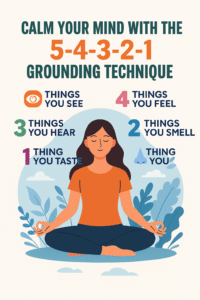
This is different from pretending a real problem does not exist. You are giving your mind a temporary place to stand so you can respond to that problem with more clarity. The complete 5-4-3-2-1 grounding technique offers a structured way to use your senses.
5. Use Self-Talk You Can Honestly Believe
Avoid demanding statements such as, “I will be completely calm in one minute.” Your mind may reject them immediately, which can leave you feeling even more frustrated.
Try something more believable:
I have felt anxious before, and I have made it through before. I only need to choose the next useful step.
Anxiety is something you are experiencing. It does not have to become your identity. There is an important difference between saying, “I feel anxious right now,” and repeatedly telling yourself, “I am an anxious person and this is simply who I am.”
From a self-concept perspective, you can acknowledge the present feeling without giving it permanent authority over the person you believe yourself to be.
You can also ask, “What do I know right now, and what is my mind predicting?” That question separates the present facts from the frightening story growing around them.
6. Release Some of the Physical Tension
Anxiety often shows up in clenched hands, raised shoulders, a tight jaw, or rigid posture. Choose one area and gently let it soften.
You might press your feet into the floor for a few seconds, then release. You might gently tighten your hands and let them relax. Move slowly and skip anything that causes pain, dizziness, or more distress.
Progressive muscle relaxation can be useful, but you do not need to tense every muscle group during an intense moment. A small physical release may be enough to remind your body that it does not have to brace against everything at once.
7. Choose One Simple Action
Once you have created a little space, choose one ordinary action. Take a comfortable walk when movement feels appropriate. Wash one dish. Step outside for fresh air. Drink some water. Send a message to someone you trust. Delay a nonurgent decision until you feel steadier.
Purposeful redirection can help during an anxious spike. It becomes less helpful when it turns into constant avoidance of every place, sensation, or situation connected with anxiety.
If anxious moments keep returning, these 7 Small Steps to Help You Manage Anxiety can help you work beyond the immediate spike.
What If the Anxiety Does Not Ease Quickly?
A technique can be useful even when it does not make the anxiety disappear. Perhaps it keeps the feeling from growing stronger. Perhaps it helps you remain where you are for another minute, ask for support, or avoid making a rushed decision.
Do not turn the result into a judgment about yourself. A breathing exercise that helped yesterday may feel irritating today. Grounding may work in one setting and feel distracting in another. Human beings are not machines, and anxiety does not follow one predictable script.
When one tool does not help, return to the basics. Check your physical safety, reduce unnecessary stimulation, and contact someone you trust. Your responsibility is to respond wisely, not to produce instant calm on demand.
Create Your Three-Tool Anxiety Reset
Before the next anxious moment, choose three tools that generally feel safe and useful to you:
- One way to steady your body
- One way to ground your attention
- One person or source of support you can contact
Write them somewhere easy to find. Anxiety is not the ideal time to search through fifteen articles and decide what might work.
Practice your chosen tools when you are reasonably calm. Familiarity makes them easier to remember when your thoughts are moving quickly.
If you want to build this out before the next difficult moment, Create Your Anxiety Support Plan: 5 Things to Decide Now gives you a more complete framework.
When Immediate Coping Tools Are Not Enough
Immediate coping tools can be valuable, but recurring panic or anxiety that interferes with sleep, work, relationships, travel, or ordinary life deserves more than another list of quick tips.
Therapy, medication, medical care, or a combination of support may be appropriate. Seeking that support is not surrendering your personal power. It is one way of using it consciously.
The National Institute of Mental Health provides more information about panic symptoms, treatment options, and when to seek professional help.
You Still Choose the Next Step
Anxiety may be present, but it is not the whole of you. You are also the awareness noticing it, the wisdom choosing how to respond, and the part of you that can still take one purposeful step.
You do not have to win a battle with anxiety in the next sixty seconds. Find one small opening. Let your body settle where it can. Bring your attention back to what is actually happening. Then choose the next useful step.
Do not demand instant peace. Create a little room for it, and begin there.
Want More Than an Emergency Reset?
These tools can help you steady yourself when anxiety suddenly gets loud. If you want to go deeper into the thoughts, sensations, and patterns that keep anxiety returning, Overcome Anxiety offers a more structured next step.
Discover more from Jepsen Mindset and Meditation Monk
Subscribe to get the latest posts sent to your email.
What’s Your Body Trying to Tell You?
Feeling tired, sluggish, bloated, or just not quite like yourself?
Sometimes it helps to stop guessing and take a closer look at your everyday wellness habits, nutrition, energy, and goals.
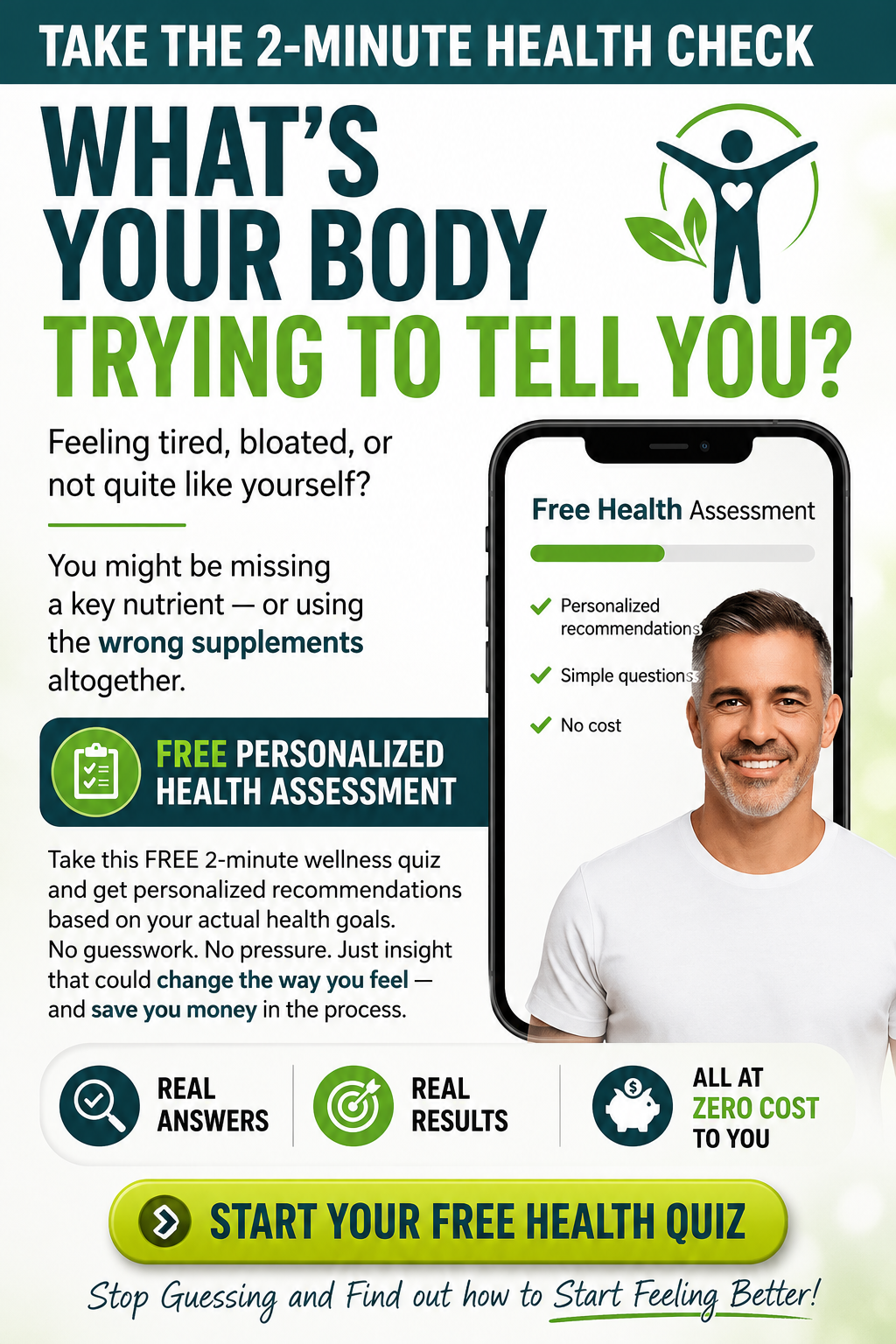
Take this FREE 2-minute Health Check and get recommendations based on your answers and what you want to improve.
No complicated forms. No pressure. Just a quick way to get a little more clarity about where you are—and what you may want to explore next.
Real Questions
Personalized Suggestions
ZERO Cost to You
A couple of minutes could give you a better idea of where to start.