Calm Your Mind and Reclaim the Moment: Mastering the 5-4-3-2-1 Grounding Technique

When the Mind Races, Return to the Present
Anxiety has a way of pulling your attention everywhere except where you actually are. Your mind jumps ahead to what might happen, replays what already happened, or spins through possibilities that have not happened at all.
Sometimes the most useful thing you can do is stop trying to solve every thought and reconnect with what is happening right now.
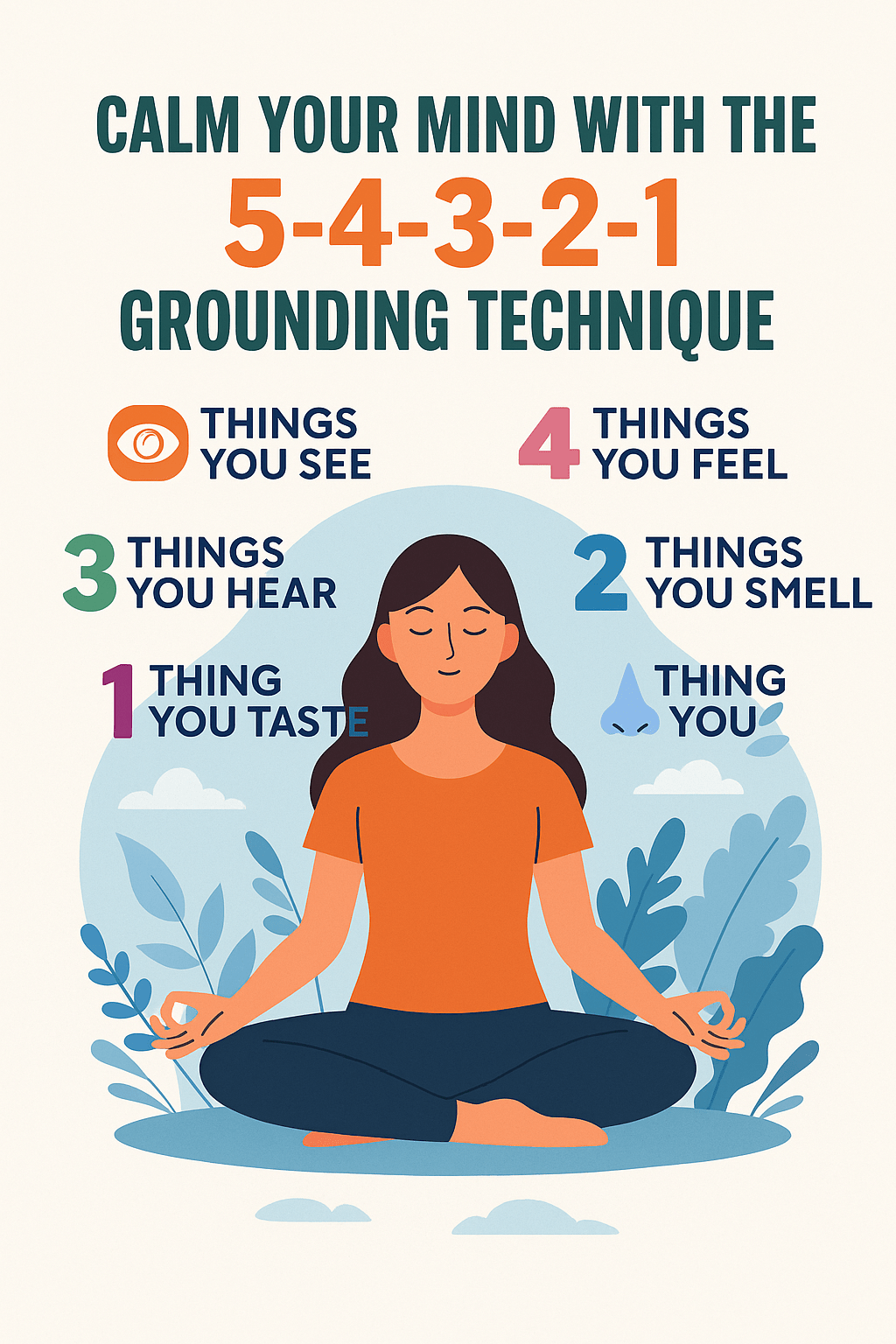
That is the purpose of the 5-4-3-2-1 grounding technique. By deliberately noticing what you can see, feel, hear, smell, and taste, you give your attention something real and immediate to work with.
For me, that makes grounding more than an anxiety exercise. It fits naturally with the teachings of Neville Goddard and Abraham-Hicks because it helps you interrupt an unwanted state and consciously choose where you place your attention next.
What Is the 5-4-3-2-1 Grounding Technique?
The 5-4-3-2-1 technique is a sensory awareness exercise that brings your attention back to the present moment. Instead of wrestling with every anxious thought, you deliberately notice what is actually around you.
The exercise is simple enough to remember when your thoughts are racing, and it does not require any special equipment or meditation experience.
How to Do the 5-4-3-2-1 Grounding Exercise
- Name 5 things you can SEE
Scan your environment and say aloud, or silently name, five things you can see. Big or small, obvious or overlooked, it all counts. Example: “my coffee mug, the window, a pen, a plant, the carpet fibers.” - Name 4 things you can FEEL
Focus on physical sensations around you. Example: “the chair under me, the fabric of my shirt, my feet on the floor, my watch on my wrist.” - Name 3 things you can HEAR
Tune in. You might need to pause and really listen. Example: “a car passing, my own breathing, the refrigerator hum.” - Name 2 things you can SMELL
Take a comfortable breath. If nothing is obvious, notice whatever scent is available or recall a familiar smell nearby. Example: “coffee, laundry detergent.” - Name 1 thing you can TASTE
Notice the lingering flavor in your mouth. Toothpaste, mint gum, coffee, or simply “nothing” is okay too.
If slowing your breathing helps you settle, you can also pair the exercise with one of these breathing techniques for anxiety.
Why Grounding Can Help You Reconnect With the Present
The purpose of grounding is simple: redirect your attention from the storm in your head toward what is actually happening around you.
Mental-health services commonly recommend the 5-4-3-2-1 exercise as a practical grounding technique during anxiety, stress, intrusive thoughts, or emotional overwhelm. South Tees Hospitals NHS Foundation Trust, for example, includes sensory grounding among brief techniques for managing anxiety. The senses give your attention something immediate to notice: this chair, this sound, this breath, this moment.
That does not mean one grounding exercise automatically ends anxiety or switches off your nervous system. It means you are interrupting the mental loop and giving yourself another place to put your attention.
If anxiety has become a recurring pattern, you may also find the spiritual path to overcoming anxiety helpful as a broader way to return to flow and presence. And if anxiety is severe, persistent, or interfering with daily life, qualified professional support can be part of moving forward too.
Assume the Feeling of Calm and Presence
Neville Goddard taught that your assumptions create your reality. In this context, I see that as an invitation to notice what state you are occupying and consciously practice a different one when you can.
“Change your conception of yourself and you will automatically change the world in which you live.”
When you do this exercise, you are not just naming objects. You are practicing the role of the calm, grounded observer instead of automatically identifying with every anxious thought that passes through your mind.
That does not mean pretending there is never anything to be concerned about. It means giving yourself enough space to distinguish what is actually happening from what your mind is adding to it.
Use Your Emotional Guidance to Shift Direction
According to Abraham-Hicks, your emotional state is your guidance system. From that perspective, grounding can be a way to begin shifting your emotional direction. You may not jump from panic to joy, but moving from panic toward presence is still movement.
“You cannot be in a steady state of appreciation and a state of anxiety at the same time.”
As you bring your attention back to your senses, you give yourself a chance to stop feeding the same anxious momentum. Even a small shift toward clarity can change what you choose next.
Try This Mini Grounding Ritual
Here is a guided version you can return to whenever you need it:
“I see…” “I feel…” “I hear…” “I smell…” “I taste…”
Then repeat:
“I am here. I am present. I can choose my next response.”
You do not have to force yourself to feel wonderful. The point is to become present enough to make the next choice consciously.
Ground Yourself, Then Choose What Comes Next
Grounding does not require you to pretend the problem is gone. It gives you a moment in which the problem is no longer the only thing occupying your awareness.
See what is here. Feel what is here. Listen to what is here.
Come back to yourself.
Then decide what you want to think, say, or do next. You may not control everything happening around you, but you can become more conscious about what you do next.
That is where grounding and conscious creation meet. You stop reacting automatically and start responding deliberately. When you need a bigger reset, it can also help to calm first, then act.
Your next moment begins now.
Want More Ways to Work With Anxiety?
Grounding is one tool you can use when anxiety starts pulling you away from the present. If you want a broader set of practical strategies for understanding your reactions and responding more consciously, explore Anxiety Away.
Discover more from Jepsen Mindset and Meditation Monk
Subscribe to get the latest posts sent to your email.
What’s Your Body Trying to Tell You?
Feeling tired, sluggish, bloated, or just not quite like yourself?
Sometimes it helps to stop guessing and take a closer look at your everyday wellness habits, nutrition, energy, and goals.
Take this FREE 2-minute Health Check and get recommendations based on your answers and what you want to improve.
No complicated forms. No pressure. Just a quick way to get a little more clarity about where you are—and what you may want to explore next.
Real Questions
Personalized Suggestions
ZERO Cost to You
A couple of minutes could give you a better idea of where to start.