Breathe Better: How the 4-7-8 Breathing Technique Can Calm Your Mind and Body

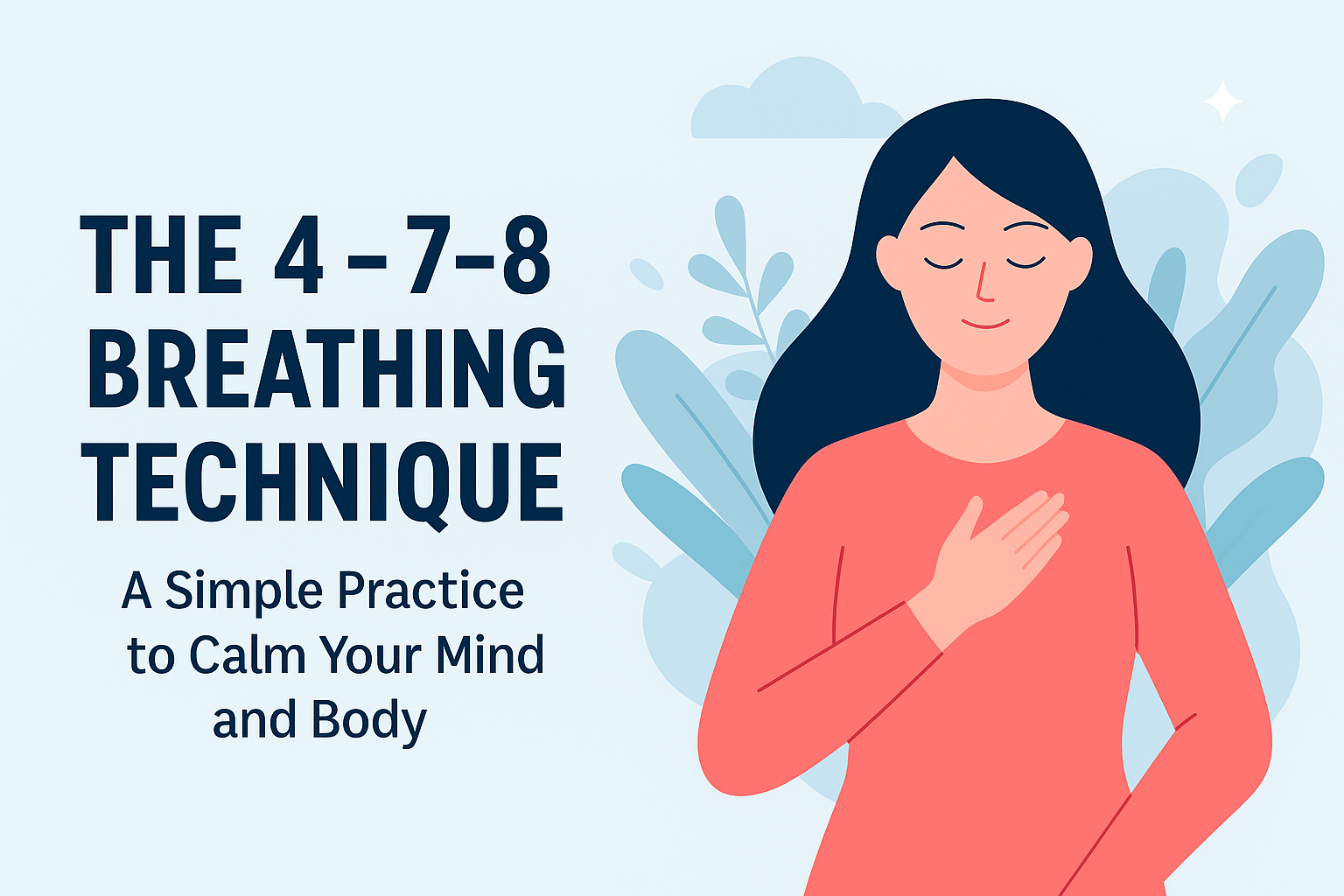
When your thoughts are racing or your body feels wound up, sometimes the simplest thing you can do is change the way you breathe.
The 4-7-8 breathing technique gives your mind something deliberate to focus on while slowing the rhythm of your breathing. It costs nothing, takes only a few minutes, and can be practiced almost anywhere.
It is not a cure for anxiety, insomnia, or panic attacks. But it can be a useful way to interrupt the momentum of stress, return your attention to the present, and give yourself a moment before deciding what comes next.
What Is the 4-7-8 Breathing Technique?
The 4-7-8 method is a rhythmic breathing practice popularized by Dr. Andrew Weil and rooted in yogic breathing traditions. Weil has described it as a “natural tranquilizer for the nervous system,” which is his way of describing the calming purpose of the practice. The Andrew Weil Center for Integrative Medicine teaches it as a simple breath exercise that can be practiced regularly.
The basic pattern is simple: breathe in for 4 counts, hold for 7 counts, and breathe out for 8 counts.
How to Practice 4-7-8 Breathing
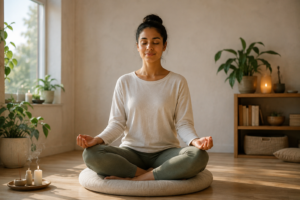
- Sit or lie down comfortably.
- Place the tip of your tongue just behind your upper front teeth.
- Exhale completely through your mouth, making a gentle whooshing sound.
- Close your mouth and inhale quietly through your nose for a count of 4.
- Hold your breath for a count of 7.
- Exhale completely through your mouth for a count of 8.
- Repeat for a total of four cycles when you are starting out.
The numbers are a ratio, not a contest. If the full count feels too long, keep the 4:7:8 relationship but move through the entire sequence faster rather than forcing yourself to hold your breath longer than feels comfortable.
“Feelings come and go like clouds in a windy sky. Conscious breathing is my anchor.” — Thích Nhất Hạnh
Why Slower Breathing Can Help You Settle Down
Slow, deliberate breathing changes what you are doing physically at a moment when stress may be pushing you toward faster, shallower breathing. It also gives your attention a simple task: breathe, count, pause, exhale.
Research on slow breathing more broadly suggests that it can influence autonomic activity and may support relaxation and emotional regulation. Research specifically on the 4-7-8 pattern is much more limited, so I would not turn the numbers themselves into magic.
For me, the practical value is simpler. When you consciously change your breathing, you interrupt what you were doing. That pause can give you enough space to stop reacting automatically and choose your next response. If you want other gentle options too, see these breathing techniques for anxiety.
What the Research Actually Says
There is some encouraging research, but it is still a small evidence base. A 2022 study of 43 healthy young adults found immediate changes in heart rate variability along with lower heart rate and systolic blood pressure after 4-7-8 breathing.
That does not establish 4-7-8 breathing as a treatment for high blood pressure, insomnia, panic attacks, or anxiety disorders. A 2025 study comparing different paced-breathing patterns found more limited effects for the exact 4-7-8 pattern and stronger heart-rate-variability effects from breathing at six breaths per minute.
So I see 4-7-8 breathing as a practical calming tool, not a medical cure. It can be one part of a larger approach that may also include mindfulness techniques for stress and overwhelm, movement, sleep, supportive relationships, and qualified professional help when needed.
When to Use the 4-7-8 Technique
The beauty of the technique is that you do not need special equipment or a perfect meditation space. You can use it when you want to create a deliberate pause:
- Before sleep: As part of a quiet wind-down routine when your mind is still busy.
- During a stressful moment: To slow down and reconnect with the present before you respond.
- Before a difficult conversation, meeting, or presentation: To give yourself a few moments of deliberate focus.
- When you feel impatient: In traffic, a long line, or any situation where you cannot immediately change what is happening.
- As part of a daily practice: Not because you have to become perfectly calm, but because practicing when you are already okay makes the technique easier to remember when you need it.
You can also pair the breathing with a simple visualization. As you exhale, imagine releasing some of the tension you no longer need to carry. Or follow the breathing with one of these mantras for inner peace.
Don’t Force the Breath
Some people feel lightheaded when they first try controlled breathing. Don’t force it. Return to normal breathing if you feel uncomfortable, and practice the sequence more gently next time.
The goal is not to prove how long you can hold your breath. The goal is to become more conscious of it. If a faster version of the same 4:7:8 ratio feels better, use that and let comfort come with practice.
“Sometimes the most important thing in a whole day is the rest we take between two deep breaths.” — Etty Hillesum
Use the Breath Before You React
The most useful thing about the 4-7-8 technique may not be the numbers at all. It is the pause.
When your thoughts are racing, your heart is pounding, or somebody has just pushed every button you have, you do not always have to react immediately.
Breathe in. Pause. Breathe out.
Give yourself a few seconds to come back to yourself before deciding what happens next. That is the same principle behind calming yourself first and then taking action.
Because peace is not always something you find after the problem disappears. Sometimes it begins with the way you meet the problem.
Want More Tools for Working With Anxiety?
Breathing is one tool, not the only tool. If anxiety has been taking up too much space in your life, Anxiety Away offers additional practical ways to understand your reactions, regain perspective, and respond more consciously.
Discover more from Jepsen Mindset and Meditation Monk
Subscribe to get the latest posts sent to your email.
What’s Your Body Trying to Tell You?
Feeling tired, sluggish, bloated, or just not quite like yourself?
Sometimes it helps to stop guessing and take a closer look at your everyday wellness habits, nutrition, energy, and goals.
Take this FREE 2-minute Health Check and get recommendations based on your answers and what you want to improve.
No complicated forms. No pressure. Just a quick way to get a little more clarity about where you are—and what you may want to explore next.
Real Questions
Personalized Suggestions
ZERO Cost to You
A couple of minutes could give you a better idea of where to start.