
Can You Get All the Nutrition You Need From Food?

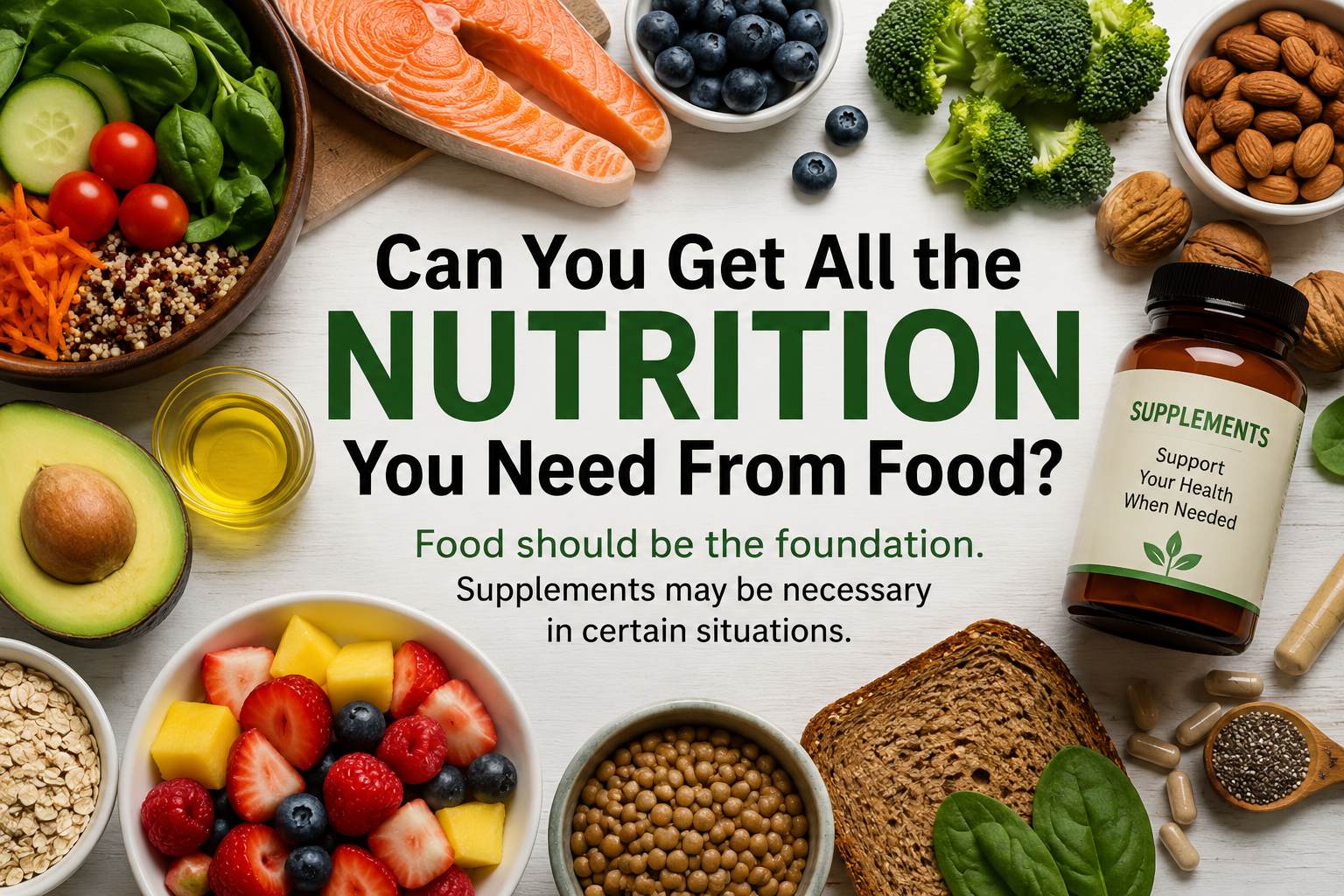
Food should be the foundation of good nutrition. A varied diet gives your body vitamins and minerals along with protein, carbohydrates, fats, fiber, and thousands of other naturally occurring compounds that do not come neatly packaged in a pill.
But ‘food first’ does not mean ‘food is always enough for every person in every circumstance.’
Age, pregnancy, dietary restrictions, medications, digestive or absorption problems, diagnosed deficiencies, and certain medical conditions can change what an individual needs. Sometimes fortified foods or a supplement make sense. Sometimes they are specifically recommended.
The important question is not whether everybody needs supplements. It is whether you have a nutritional need that your usual diet is not meeting.
Can Food Provide Everything You Need?
For many people, a varied and reasonably balanced diet can provide most of what the body needs. Current U.S. dietary guidance still puts whole, nutrient-dense foods at the center of healthy eating rather than treating supplements as the starting point.
That is why I would not assume that modern food is somehow too nutritionally depleted to be useful. Soil, storage, transportation, preparation, and processing can affect foods in different ways, but none of that means the entire food supply has become nutritionally inadequate.
The better question is whether your own eating pattern gives you enough variety and enough of the nutrients that matter for your circumstances.
Why Food Should Still Be the Foundation
Supplements are good at supplying specific nutrients. Food does much more than that.
A meal can give you protein, fiber, fats, carbohydrates, vitamins, minerals, and a wide range of naturally occurring compounds all at once. Food also gives you something a pill cannot: an eating pattern that can become part of your everyday life.
If most of your diet comes from heavily processed convenience foods, the first answer is not automatically ‘take more supplements.’ Sometimes the more useful answer is to improve the food side of the equation.
That does not require perfection. Add more fruits and vegetables. Include appropriate protein sources. Eat more fiber-rich foods. Choose whole or minimally processed foods more often. Make the next meal a little better instead of trying to become a nutrition saint overnight.
If you want more background on why the overall pattern matters, read How Poor Nutrition Harms Your Immunity.
When Supplements May Actually Make Sense
Supplements make the most sense when they have a reason.
There are situations in which a nutrient can be difficult to obtain from food alone, a person has an increased requirement, or a qualified professional identifies a deficiency or risk.
For example, people who eat little or no animal food need to pay particular attention to vitamin B12 because naturally occurring B12 is found primarily in animal foods. People who can become pregnant are advised to get folic acid from fortified foods and/or supplements in addition to a healthy eating pattern. Vitamin D is another nutrient that may require special attention for some people.
The point is not that everyone needs the same supplement. The point is that nutritional needs are individual.
Dietary Restrictions and Nutrients That Need Special Attention
Vegetarian, vegan, allergy-restricted, medically restricted, and other specialized diets can all be healthy when they are thoughtfully planned. But removing entire food groups can also mean certain nutrients deserve more attention.
That is where fortified foods, careful meal planning, laboratory testing when appropriate, or a targeted supplement may become useful.
I would rather know what I am trying to correct than take a handful of pills because somebody on the Internet said everybody is deficient in everything.
Absorption Problems and Medications Can Change the Equation
Eating a nutrient and absorbing it are not always the same thing.
Vitamin B12 is a good example. Certain gastrointestinal conditions and surgeries can interfere with B12 absorption. Some medications can affect nutrient levels too. The NIH Office of Dietary Supplements notes that gastric acid inhibitors and metformin can affect vitamin B12 status.
This is one reason supplement decisions should be based on your actual situation rather than a one-size-fits-all rule.
More Is Not Always Better
There is a strange idea in the wellness world that if a little of something is good, a lot must be better. Nutrition does not work that way.
Some supplements can interact with medications. Some nutrients can be harmful in excessive amounts. Problems can also happen when people combine several supplements or use them in place of prescribed treatment.
The FDA recommends discussing supplements with a qualified health professional, especially when medications, medical conditions, pregnancy, surgery, or multiple supplements are involved.
Taking responsibility for your health does not mean taking every supplement somebody says you need. It means paying attention, asking questions, improving what you eat where you can, and using supplements intelligently when there is a legitimate reason for them.
How Do You Know Whether You Need a Supplement?
Start with your actual life, not somebody else’s supplement cabinet.
- What does your usual diet look like?
- Do you avoid or exclude major food groups?
- Are you in a life stage with specific nutritional recommendations?
- Do you take medications that can affect nutrient status?
- Do you have a digestive condition or history of gastrointestinal surgery?
- Has a blood test or qualified professional identified a deficiency?
If there is a real reason to suspect a gap, talk with an appropriate physician, registered dietitian, pharmacist, or other qualified professional about whether food changes, fortified foods, testing, or a targeted supplement make sense for you.
Food should still be the foundation. Supplements can be useful tools. The mistake is turning either one into a religion.
You do not have to choose between ‘food fixes everything’ and ‘everybody needs supplements.’ Reality is more individual than that.
This article is for general educational information and is not individualized medical or nutritional advice. Nutrient needs, deficiencies, supplement safety, and medication interactions vary by person.
Want to Strengthen the Food Side of the Equation First?
My free Healthy Eating ebook covers balanced meals, protein choices, fruits and vegetables, processed foods, and practical planning ideas to help you build a healthier eating pattern without trying to become perfect overnight.
Discover more from Jepsen Mindset and Meditation Monk
Subscribe to get the latest posts sent to your email.
What’s Your Body Trying to Tell You?
Feeling tired, sluggish, bloated, or just not quite like yourself?
Sometimes it helps to stop guessing and take a closer look at your everyday wellness habits, nutrition, energy, and goals.
Take this FREE 2-minute Health Check and get recommendations based on your answers and what you want to improve.
No complicated forms. No pressure. Just a quick way to get a little more clarity about where you are—and what you may want to explore next.
Real Questions
Personalized Suggestions
ZERO Cost to You
A couple of minutes could give you a better idea of where to start.