5 Common Limiting Beliefs Destroying Your Self-Confidence

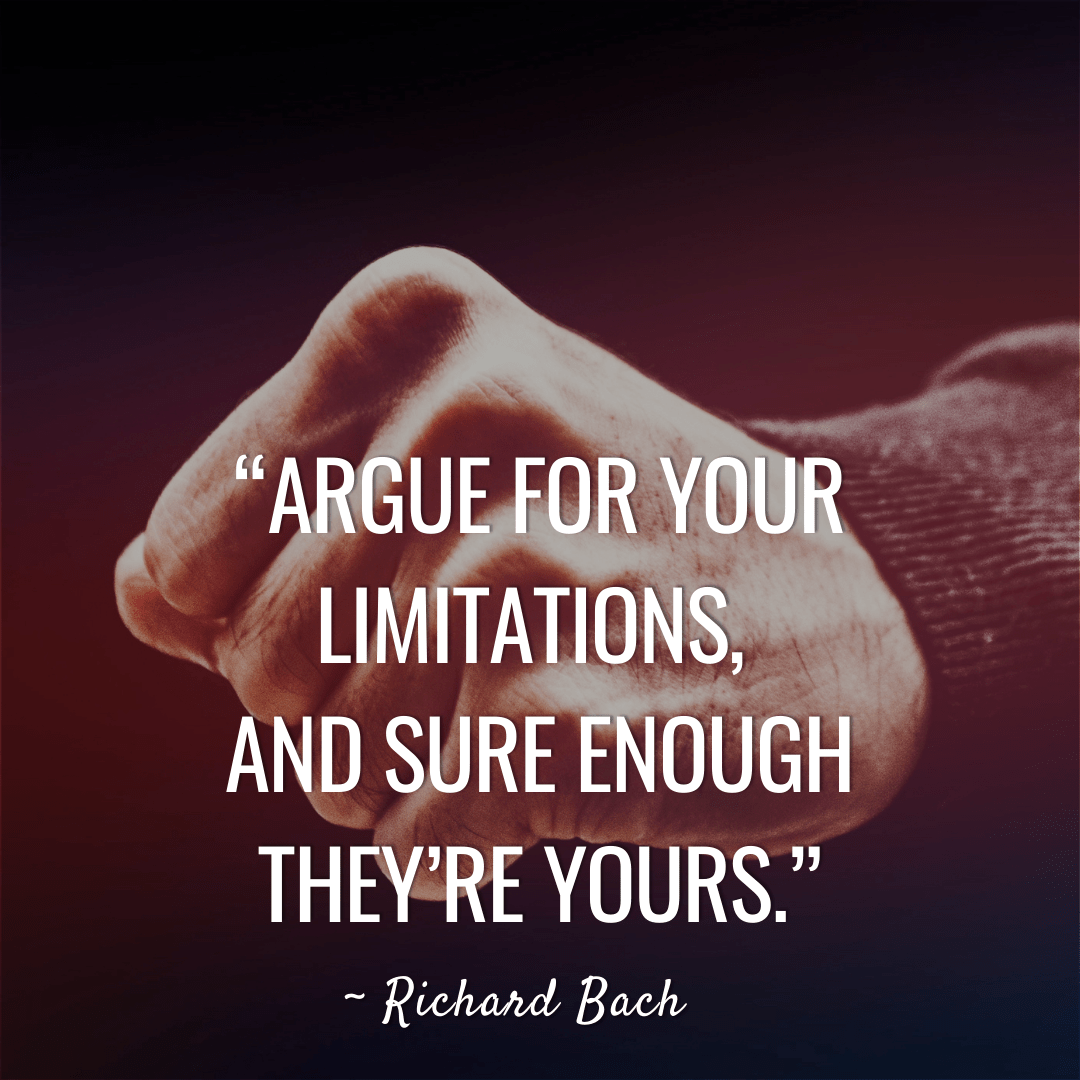
Self-confidence doesn’t vanish overnight. It gets chipped away by quiet, repeating thoughts that we often do not even realize we are carrying.
These thoughts sound like “I’m not good enough,” “I’ll never figure it out,” or “Other people just have it easier.” They aren’t facts. They’re beliefs. A belief is just a thought that you keep thinking.
The dangerous thing about beliefs is that they shape your perception until they feel like facts. They influence what you notice, what you expect, how you respond to opportunities, and how you present yourself to other people.
The good news is that once you recognize a limiting belief, you can begin to rewrite it. For example, “I cannot learn because I am not smart” can become, “It may take me extra time, but I will find a way to learn the things I need in my life.” Learning how to challenge negative thoughts helps you separate an old assumption from what is actually possible now.
Sometimes a limiting belief shows up less like a clear sentence and more like hesitation. If you keep wondering whether your caution is good judgment or fear in disguise, How to Overcome Self-Doubt Without Ignoring Good Judgment explores that difference and how to move forward without ignoring useful warning signs.
Once you recognize the belief, the next step is deciding what you will do differently because of that awareness. Break Through Your Limits and Attain Greater Success takes that next step by connecting self-concept with imagination, daily action, feedback, and consistency.
Let’s look at five common limiting beliefs that may be destroying your self-confidence.
1. “I’m Not Attractive Enough”
Do you constantly think about your physical body in terms of what you weigh or how you look? Do you feel everyone is judging you, and does this weaken your self-confidence when you are around people?
This may happen frequently when you try to make new friends or find a partner. Your belief could be wrong. The issue might be how you present yourself to people and the vibration you give off. People are more sensitive to what they “feel” about someone than how that person looks.
Body-image issues often plant early seeds of self-doubt. This belief tells you that your worth is tied to your appearance, when confidence actually grows from within.
When you go out, notice how people you consider overweight or average-looking still have friends or partners. That is because of what that particular person thinks of themselves and the air of confidence they project. They do not hold the same limiting belief about their looks.
Your appearance is one part of who you are, but it is not the total measure of your value. You can care for your appearance and make changes that matter to you without postponing friendship, love, participation, or happiness until you believe you look perfect.
“To be beautiful means to be yourself. You don’t need to be accepted by others. You need to accept yourself.” — Thich Nhat Hanh
New Belief or Mantra:
“I radiate confidence, and that energy makes me magnetic. My beauty is unique, and I honor it fully.”
The next time you enter a social setting, stop monitoring how you imagine everyone sees you. Focus instead on making one genuine connection.
2. “I Should Always Feel Happy”
You will not feel happy every moment, nor should you expect to. Sadness, anger, fear, disappointment, and grief are natural parts of life. The limiting belief begins when you decide that an uncomfortable emotion is permanent, that it defines you, or that you have no power to influence what happens next.
People often try to escape painful feelings through overeating, substance use, endless distraction, or other habits that provide temporary relief without creating lasting happiness.
Real happiness is not pretending that nothing hurts. It is a state you cultivate through your thoughts, choices, gratitude, relationships, spiritual practices, and daily actions.
You may not choose every feeling that arises, but you can choose how you respond to it. You can continue feeding the thoughts that keep you miserable, or you can begin looking for thoughts and actions that move you toward peace.
Mental-health conditions can make that choice far more difficult, and professional assistance may be necessary. Seeking help is not a surrender of personal power. It is one of the ways you exercise it.
Begin by deciding that your present emotional state does not have to become your permanent identity. Notice what is still good, take one constructive action, and allow yourself to move forward gradually.
“The way I see it, if you want the rainbow, you gotta put up with the rain.” — Dolly Parton
New Belief or Mantra:
“I allow all emotions to move through me. Peace comes when I accept myself fully, in every state.”
3. “I Don’t Deserve Good Things”
This belief runs quietly in the background, telling you that success, love, peace, or abundance is for other people, not you. It erodes self-worth and keeps you stuck.
Being worthy is a belief many people struggle with. You must believe you are worthy of love and be willing to receive that love as well as give it to others.
When your mind is cluttered with the thought, “I don’t deserve good things to happen to me. That only happens to other people,” your subconscious mind begins reinforcing that expectation. You may overlook opportunities, reject help, remain in situations that diminish you, or feel guilty when something positive comes your way.
This does not mean that you caused every painful event in your life. It means your repeated beliefs influence what you pursue, what you accept, what you reject, and what you allow yourself to imagine.
Install the belief that you are worthy of good things and do not wait for someone else to give you permission. Have the confidence to go into the world and seek the things you want in your life.
“Are not five sparrows sold for two farthings? And not one of them is forgotten before God. Even the very hairs of your head are all numbered. Don’t fear; you are worth more than many sparrows.” — Luke 12:6–7 (World English Bible)
“You yourself, as much as anybody in the entire universe, deserve your love and affection.”
— Attributed to the Buddha
“God loves each of us as if there were only one of us.”
— St. Augustine of Hippo
New Belief or Mantra:
“I am worthy of love, success, and abundance—because I exist. Receiving is safe, natural, and aligned with who I truly am.”
Notice one healthy thing you habitually reject—a compliment, assistance, rest, affection, or an opportunity—and practice receiving it without immediately minimizing it.
4. “Rejection Means I’m Not Good Enough”
Fear of rejection creates hesitation, masks authenticity, and makes you play small. Rejection may contain feedback, but it is not a complete definition of your value.
We all get rejected at some point in life. Holding the belief that you will always be rejected, no matter what, will destroy your self-confidence. You may see a dream job that you want to pursue, but fear being rejected by the hiring department and decide not to try.
When this happens repeatedly, your self-confidence erodes, and you may choose to give up and remain in a job you hate.
Fear of rejection can also appear in relationships. You find someone who seems right for you, but the fear of taking the relationship to the next level affects your confidence. Instead of moving forward honestly, you may self-sabotage the relationship by doing or saying something that causes it to end.
A rejection may tell you that you need more preparation, a different approach, better timing, or a more compatible opportunity. It may also reflect another person’s preferences or circumstances. Their decision is not an objective measurement of your complete worth.
Confidence does not guarantee that everyone will accept you. It gives you the strength to learn what you can, continue expressing yourself, and refuse to abandon your own value when someone says no.
“Rejection is redirection. It’s a course correction toward your true path.” — Unknown
New Belief or Mantra:
“Every ‘no’ leads me closer to alignment. I express myself freely and trust that the right opportunities recognize my value.”
Ask what you can learn, make any useful adjustment, and take another action before one rejection becomes a lifelong rule.
5. “I Just Don’t Have What It Takes”
This belief tells you that you are not smart enough, capable enough, or strong enough. But self-confidence is not merely something you have. It is something you build.
Do you have big dreams? Is there something unique you want to do with your life, but internally you keep telling yourself that it will not work out, so why even bother to try?
When you squash every attempt to pursue your dreams, your self-confidence takes a hit. As your confidence drops, it affects other areas of your life, including making new friends and performing work that once felt natural.
You may find that phone calls you used to make at work become more challenging, or talking to clients becomes a tense moment rather than a pleasant interaction.
You may not currently have every skill, answer, resource, or connection required to reach your goal. That does not mean you do not have what it takes. It means there are things you still need to learn, practice, or acquire.
Every time you avoid trying, the old belief becomes stronger. Every meaningful step gives you evidence that you are more capable than you assumed. Work steadily toward fulfilling your dreams and believe that you can learn what the journey requires.
“You may not control all the events that happen to you, but you can decide not to be reduced by them.” — Maya Angelou
New Belief or Mantra:
“I already have what I need to begin. Every step I take reveals more strength, clarity, and support.”
Reduce the dream to one concrete step: research one requirement, practice for 15 minutes, make one phone call, ask one question, or submit one application.
How to Rewrite a Limiting Belief
Recognizing a limiting belief is only the beginning. Some beliefs were formed through criticism, family expectations, painful experiences, social comparison, or conclusions carried from the past. Learning to break the chains of your past includes deciding that an old experience does not have to remain your permanent identity.
1. Identify the Exact Belief
Write down the sentence you repeatedly tell yourself. Be specific. “I feel bad” is a feeling. “Nobody values what I have to say” reveals the belief beneath it.
2. Ask Where It Came From
Was the belief created by one painful experience, repeated criticism, family expectations, comparison, or fear? Understanding its origin can help you see that it was learned rather than permanently built into you.
3. Question Whether It Is Completely True
Look for exceptions. Beliefs containing words such as “always,” “never,” “everyone,” and “nobody” often ignore important parts of the story.
4. Choose a Stronger, Believable Thought
You do not have to jump from “I always fail” to “I succeed at everything.” A stronger belief might be, “This attempt did not work, but I can learn, adjust, and try again.”
5. Act From the New Belief
A belief becomes stronger when your behavior supports it. Speak, apply, practice, connect, ask, receive, or try again. Even a small action can interrupt the old pattern.
6. Record the Evidence
Notice what you handled, learned, completed, survived, or improved. This becomes evidence for the person you are choosing to become.
You Are Not Required to Keep Believing the Old Story
Limiting beliefs are sneaky because they usually do not sound dramatic. They sound familiar. But just because a thought is familiar does not mean it is true or helpful.
You are not required to continue thinking something merely because you have thought it for a long time.
Question the belief. Choose a more empowering assumption. Then take one action that the old belief would have prevented.
Each time you speak, try, connect, receive, learn, or begin again, you create new evidence about who you are.
Self-confidence is not the belief that everything will always work out exactly as you want. It is the realization that you can meet life, make choices, seek support when necessary, and continue moving forward without abandoning yourself.
Many limiting beliefs began as stories you accepted about your past, your abilities, or what life would allow you to become. Rewrite YOUR Life includes reflection prompts and practical mindset exercises to help you question those stories, release old programming, and consciously choose a new direction.
Discover more from Jepsen Mindset and Meditation Monk
Subscribe to get the latest posts sent to your email.
What’s Your Body Trying to Tell You?
Feeling tired, sluggish, bloated, or just not quite like yourself?
Sometimes it helps to stop guessing and take a closer look at your everyday wellness habits, nutrition, energy, and goals.
Take this FREE 2-minute Health Check and get recommendations based on your answers and what you want to improve.
No complicated forms. No pressure. Just a quick way to get a little more clarity about where you are—and what you may want to explore next.
Real Questions
Personalized Suggestions
ZERO Cost to You
A couple of minutes could give you a better idea of where to start.