Why Permanent Standard Time Is the Healthiest—and Most Honest—Clock for Our Lives
Each November, the United States sets its clocks back one hour to return to standard time. The next morning feels lighter because sunrise once again aligns with our daily routine, even though the planet’s steady march toward winter hasn’t changed. The shift is meant to bring our schedules closer to natural daylight, but after months of late sunsets under Daylight Saving Time, the sudden reset can feel abrupt.
What isn’t so welcome is how the evening flips. Sunset that was around 6:15 p.m. suddenly reads 5:15 p.m., making late afternoons feel like night. People often sigh, “It’s dark at 4:30 now,” when in truth the sun is simply setting at the same solar moment it would anyway—we just waited until deep autumn to realign our clocks with reality.
This jarring, late-season correction is a side effect of stretching Daylight Saving Time far past summer, not of Standard Time itself. And while the official rationale has long faded, the delay still serves certain interests: more evening retail hours in October, more late-season leisure spending and, in the view of some critics, a public left more tired and distracted by an unnecessary clock system.
The Physics of Daylight, Not Politics
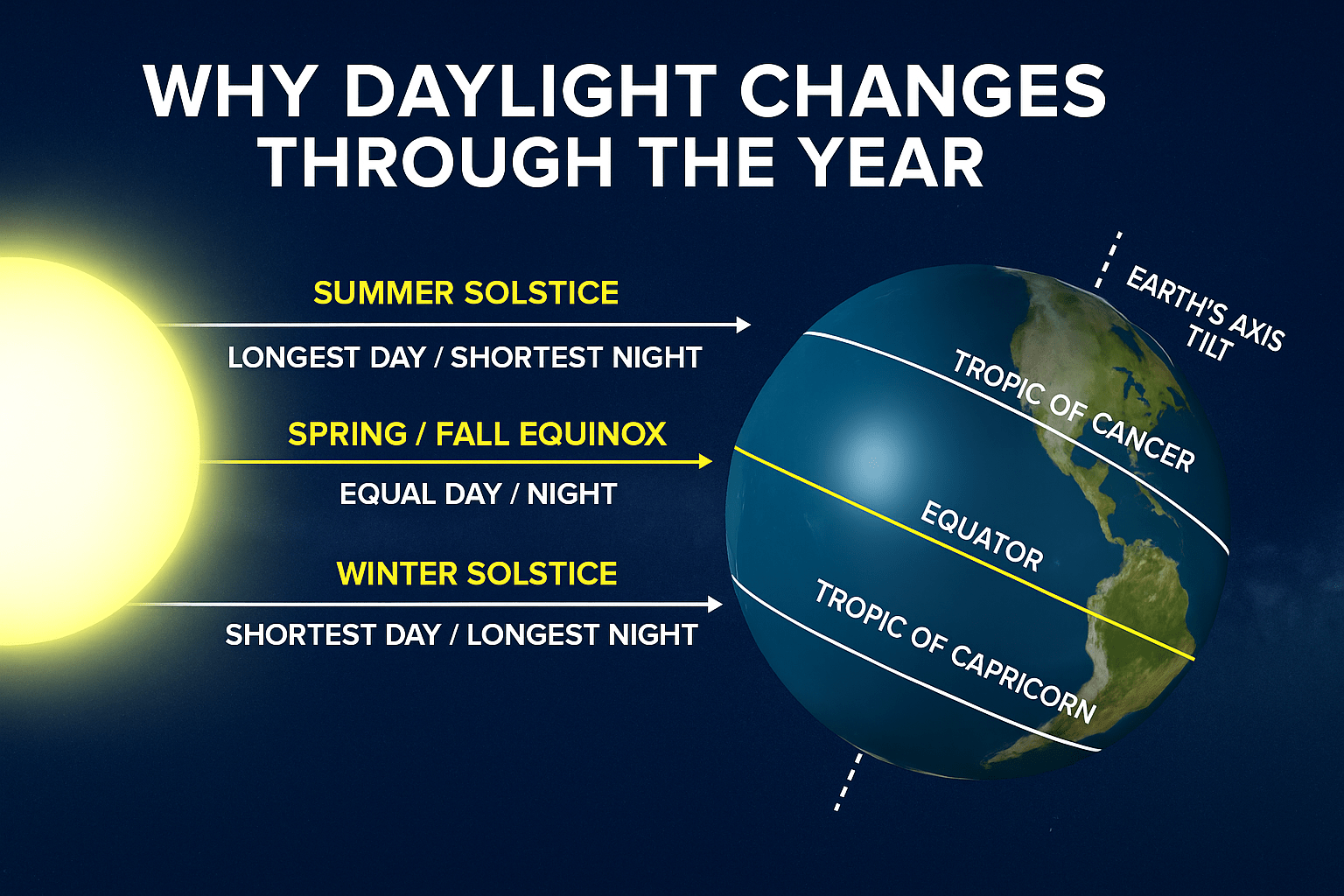
The real story of shorter days isn’t hidden in a clock. It’s written in the tilt of the Earth. As our planet moves around the sun, the Northern Hemisphere leans farther from direct sunlight each day until late December. That tilt shortens both sunrise-to-sunset daylight and the angle of the sun in the sky. No vote in Congress and no setting on a watch can create or steal even a minute of sunlight.
What the clock can do is shift when we experience that light. Daylight Saving Time holds our daily schedule an hour later than the sun for more than seven months, which is why summer evenings feel so long. When we finally return to standard time in early November, we simply acknowledge what nature has been doing all along—making mornings darker and evenings shorter as winter nears.
This distinction matters. Many people say, “It gets dark too early now,” as if the time change itself created the early sunset. In truth, the sun would reach that position whether we touched our clocks or not. The only difference is whether we stay misaligned with the sun, or admit reality sooner. Stretching DST far into autumn merely delays the inevitable and makes the seasonal shift feel harsher when the correction finally comes.
By understanding this simple astronomy, we free ourselves from the idea that moving the hands of a clock can conjure more daylight. Standard time doesn’t shorten the day; it keeps civil time honest, matching the solar noon overhead with the noon on our watches and letting our bodies wake closer to the rhythm nature intended.
Why Standard Time Fits With Our Bodies
Our bodies run on an inner clock that takes its cues from the sun. Morning light tells the brain it’s time to wake up, raise energy, and set our daily rhythm. Standard time keeps our daily schedule close to that natural signal.
Daylight Saving Time does the opposite. For most of the year we’re living an hour ahead of the sun, getting up while it’s still dark. That delay makes it harder to fall asleep at night and harder to feel fully awake in the morning. Over time, the mismatch can lead to constant tiredness, mood dips, and other health strains.
When we go back to standard time each fall, mornings feel brighter and safer. Kids aren’t waiting for the school bus in pitch black, and adults are more alert on the road. Our inner clocks can finally match the sun again. The trouble is that we stay on the late summer schedule so long that by the time we switch, many people have already built up months of fatigue.
That’s why doctors who study sleep and body rhythms agree: year-round standard time is the healthier choice. It lets sunrise guide our mornings naturally and gives us steadier sleep all winter and summer alike. Standard time isn’t taking anything away—it simply lets the clock tell the truth about where the sun really is.
Why the Switch Lingers
If standard time is healthier and more natural, why do we keep stretching Daylight Saving Time so deep into the year? The simple answer is habit—and money.
Daylight Saving Time first appeared during World War I as a way to save energy by shifting activity into brighter evening hours. But the actual energy savings turned out to be small or nonexistent. What did grow were businesses that liked late light: shopping districts, sports leagues, entertainment venues. Over time, those industries quietly pushed to extend the DST months, and Congress obliged. That’s why we now stay on summer hours for more than seven months, only snapping back in November.
The pattern continues today. Retail and recreation groups lobby to keep the “long evening” feeling that boosts spending. Lawmakers rarely get complaints about brighter October nights, but they do hear from businesses that profit when people linger out late.
Some people see a deeper convenience in all this. When we’re tired or constantly adjusting, we’re less likely to read long news stories or follow slow-moving policy changes. No one has to plan a secret scheme for that to work; the effect is built into the system. Whatever the motive, a groggy public may be less focused, less engaged, and less likely to question an inconvenient system.
Whatever the motive, the result is the same: we treat natural time as optional and leave millions of people slightly out of step with the sun for most of the year. By the time we return to standard time, our bodies are already worn from the mismatch.
Choosing Sunlight Over Political Daylight
We don’t need to keep chasing political daylight. The sun will rise and set exactly as physics dictates, no matter what our watches say. What we can change is how honestly our clocks reflect that reality.
The clearest solution is permanent standard time. It keeps mornings bright year-round, supports natural sleep patterns, and spares everyone the twice-yearly disruption. If national agreement seems far off, a more modest step would be to move the return to standard time closer to the start of autumn, softening the shock and helping bodies adjust as the season naturally shortens the day.
Individuals can start small, too. Get outside soon after waking to let natural light set your body’s timer. Dim lights an hour before bed. Keep regular meal and sleep times even when the calendar demands a clock change. These simple habits give your biology the steady cues it needs, no matter what policy makers decide.
Ultimately, this is about honesty and presence. Standard time lets noon mean noon, keeps our inner clocks in tune with the planet, and frees us from a system that benefits from keeping people just a little out of step. Moving beyond political daylight isn’t only a health choice; it’s a quiet act of clarity—living by the sun that has guided life on Earth since the beginning.
Call to Action: Let Congress Know It’s Time for Real Time
If you’re tired of political daylight and ready for clocks that tell the truth, now’s the moment to speak up. Tell your lawmakers that Americans deserve year-round standard time—the schedule that aligns with nature, supports health, and restores honesty to how we measure our days.
Contact your representatives today and urge them to end the clock-changing cycle once and for all. It’s time to bring the nation back to real sunlight, real rest, and real time.
Discover more from Jepsen Mindset and Meditation Monk
Subscribe to get the latest posts sent to your email.