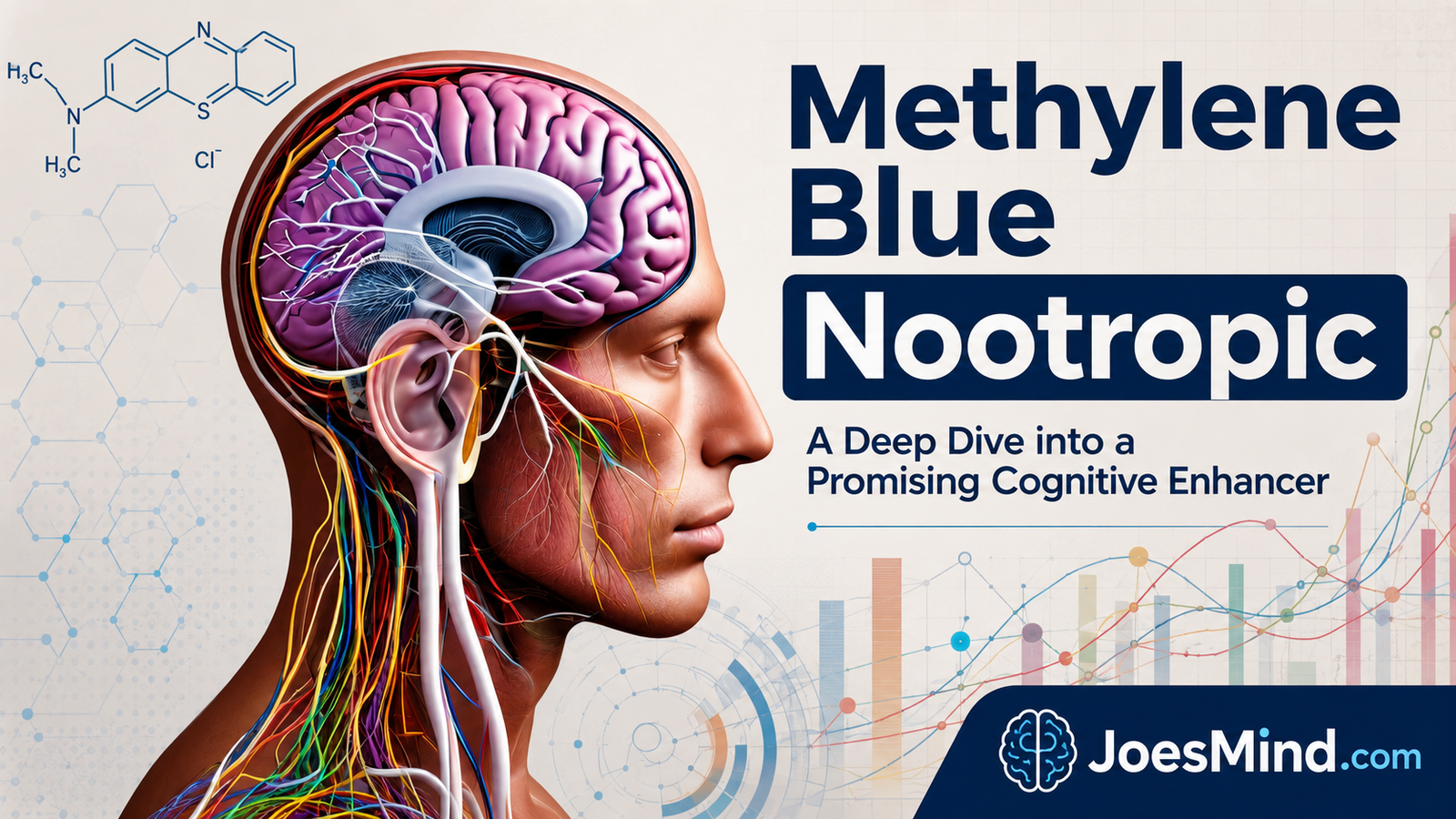
Methylene Blue as a Nootropic: What the Research Actually Shows

This article is for informational purposes only and is not medical advice. For diagnosis or treatment decisions, consult a qualified healthcare professional.
Methylene blue is one of those substances that sounds almost too strange to become a brain-health trend. It started life as a synthetic dye, developed legitimate medical uses, and now shows up in conversations about memory, mitochondria, longevity, and biohacking. There is real research behind some of that interest—but ‘there is research’ and ‘this is a proven nootropic’ are two very different statements.
That distinction matters. If you read enough wellness marketing, almost anything can be made to sound like a miracle. Methylene blue is more interesting than some of the hype suggests, but it is also more complicated. The research is promising in places, limited in others, and the safety concerns are real enough that this is not something I would treat like another harmless supplement sitting on the counter.
Why Methylene Blue Became a Nootropic
Methylene blue was first synthesized in 1876 and initially used as a textile dye. Before long, researchers found medical uses for it, including treatment for methemoglobinemia and other applications in clinical settings. Over time, it also caught the attention of people interested in energy production, brain function, and cellular health.
Part of the appeal is that methylene blue appears to affect mitochondria, the energy-producing structures inside our cells. Since the brain is so metabolically demanding, anything that might support cellular energy tends to attract attention from nootropic enthusiasts. That does not automatically make it a proven brain booster, but it helps explain why researchers and biohackers remain interested in it.
What Human Research Actually Shows
There is some legitimate human research here, which is more than can be said for a lot of trendy nootropics. In one small randomized, double-blind study, healthy adults who received a low dose of methylene blue showed increased brain activity in areas related to memory and attention and a modest improvement in memory retrieval. That is interesting. It is also not the same thing as proving that methylene blue is a reliable cognitive enhancer for the general public.
Researchers have also studied it in aging and neurodegenerative contexts, including a longer clinical trial registered at ClinicalTrials.gov. That broader research helps explain the interest, but it still does not justify acting as if the case is closed. At this point, methylene blue looks more like an intriguing area of research than a settled answer for better memory, focus, or long-term brain health.
Why Researchers Are Interested in Mitochondria
One reason methylene blue keeps coming up in nootropic conversations is its potential role in mitochondrial function. Researchers have explored whether it may help cells use energy more efficiently and reduce oxidative stress. If those mechanisms hold up in meaningful ways, that could help explain the interest in cognition, resilience, and neuroprotection.
But this is exactly where people often get ahead of themselves. A plausible mechanism is not the same thing as a proven outcome. It is one thing to say methylene blue is being studied because it may support cellular energy. It is another to say it will definitely sharpen your mind, protect your brain, or make you think better on demand. That leap is where hype usually takes over.
What Has Not Been Proven
Methylene blue has not been proven to be a general-purpose nootropic for healthy people. We do not have enough high-quality long-term evidence to say it reliably improves focus, prevents decline, or safely enhances cognition for everyday use. That does not mean it is useless. It means honesty matters.
I think that is a healthier way to approach a lot of biohacking topics. Stay curious, but do not hand your common sense over to a trend. If you are interested in this whole world of self-experimentation, you may also want to read How to Start Biohacking: 4 Simple Ways to Begin for a more grounded way to think about tracking, testing, and paying attention to results.
Methylene Blue Safety and Drug Interactions
This is where I think some of the online excitement around methylene blue gets too casual. According to current prescribing information, methylene blue carries a serious warning for serotonin syndrome when used with certain serotonergic drugs and opioids. It is also contraindicated in people with G6PD deficiency because of the risk of hemolytic anemia. That alone should tell you this is not something to play with casually.
Side effects and risks may also include gastrointestinal upset, headaches, dizziness, and medication interactions. If you are taking antidepressants, other psychiatric medications, opioids, or you have a health condition that affects blood chemistry or red blood cells, this is a conversation to have with a qualified healthcare professional before you go anywhere near it.
And to be clear, some people may feel perfectly fine trying to sort all this out on their own through internet searches and forum chatter. I would not recommend that approach. There is a difference between being proactive and being reckless.
Interesting Research, Not a Magic Brain Booster
Methylene blue is interesting. It has a real history, some intriguing research behind it, and enough biological plausibility to keep scientists looking. But from a practical point of view, I would not treat it like a miracle brain booster, and I definitely would not treat it like a casual wellness toy.
If you are curious, stay curious. Read, ask questions, and get qualified medical guidance if you are seriously considering it. That is a much wiser path than assuming every product with a futuristic reputation deserves a place in your daily routine.
Interested in Methylene Blue?
If you’re considering methylene blue, talk with a qualified healthcare professional first—especially if you take medications or have an underlying health condition.
Advertisement & affiliate disclosure: The link below is an affiliate link. If you make a purchase through it, Joe may earn a commission at no additional cost to you.
Joe recommends Methylene Blue Nootropic Dissolving Strips for readers who want to learn more about the product.
There’s no need to overpay. Compare the product, check the current price, and see how much you may be able to save.
Discover more from Jepsen Mindset and Meditation Monk
Subscribe to get the latest posts sent to your email.
What’s Your Body Trying to Tell You?
Feeling tired, sluggish, bloated, or just not quite like yourself?
Sometimes it helps to stop guessing and take a closer look at your everyday wellness habits, nutrition, energy, and goals.
Take this FREE 2-minute Health Check and get recommendations based on your answers and what you want to improve.
No complicated forms. No pressure. Just a quick way to get a little more clarity about where you are—and what you may want to explore next.
Real Questions
Personalized Suggestions
ZERO Cost to You
A couple of minutes could give you a better idea of where to start.
