How to Deal With Toxic People Without Losing Your Peace

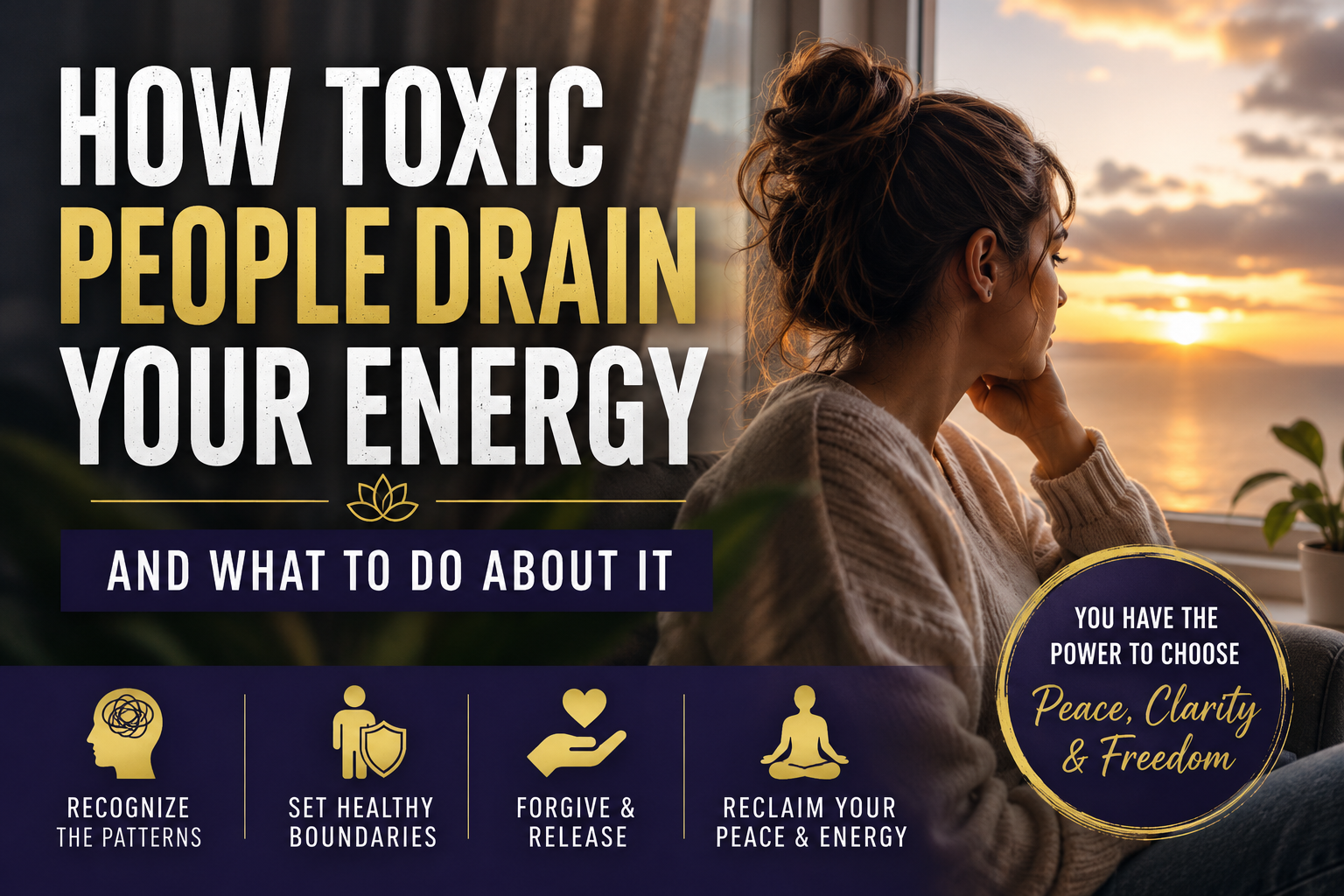
Have you ever walked away from a conversation feeling like somebody unplugged you? Maybe they criticize everything, turn every good possibility into a disaster, manipulate with guilt, or somehow leave you defending yourself for things you never intended to defend.
Most of us eventually meet someone we would call toxic. They may be family, a friend, a coworker, a partner, or somebody we keep dealing with because life did not ask our permission before introducing us.
Someone can genuinely behave badly and still not get unlimited control over your peace. That is where your part begins. You may not control what they say or do, but you can control how much access they have, what behavior you participate in, what boundaries you set, and whether you keep arguing with them in your head three hours after they have gone home.
The goal is not to pretend difficult behavior is acceptable. It is to stop building your life around it.
Recognize the Pattern Without Making Excuses for It
One bad afternoon does not automatically make somebody toxic. People get tired, scared, angry, disappointed, and occasionally say things they should not have said. What matters is the pattern.
- Consistent negativity: Nearly every possibility becomes a problem, every success gets minimized, and every hopeful idea gets dragged toward the worst-case scenario.
- Manipulation: Guilt, flattery, deception, pressure, or emotional punishment are repeatedly used to influence your choices.
- Disrespect for boundaries: Your no is treated as an opening offer rather than an answer.
- Constant blame: Responsibility always seems to belong to somebody else.
- Control: The relationship increasingly depends on you becoming smaller, quieter, more obedient, or less yourself.
Ordinary disagreement is not toxicity. Someone telling you something you do not want to hear is not automatically toxic either. But when the same unhealthy behavior keeps repeating, you do yourself no favors by explaining away every incident as though each one happened in isolation.
The Relationship Can Continue Inside You
Creating physical distance does not always end a difficult relationship. You can leave the room, stop answering the phone, or end the relationship entirely and still remain connected through anger, resentment, and repeated mental arguments.
Every time you replay what someone said, imagine the confrontation you wish you had won, or rehearse how badly they treated you, you give the relationship another moment of your emotional energy. The person may no longer be present, but the pattern remains active within you.
This is where forgiveness becomes something you do for yourself. Forgiveness does not mean pretending the behavior was acceptable. It does not erase the lesson, remove accountability, or require you to welcome someone back into your life. It means choosing not to carry the emotional bond of resentment forever.
You can bless someone and release them without approving of what they did. You can sincerely wish them healing while also deciding that they no longer have access to your time, attention, home, or private life. Forgiveness and renewed access are separate decisions.
Divine order does not produce the same outcome in every relationship. Sometimes it leads to reconciliation and a healthier way of relating. Sometimes it calls for stronger boundaries or less contact. Sometimes the most orderly and loving result is complete separation. If this is a struggle for you, How to Stop Letting Other People Disturb Your Inner Peace goes deeper into reclaiming your attention after someone has hurt or disturbed you.
Change the Inner Position You Relate From
This does not mean another person’s harmful behavior is imaginary or that you are responsible for every choice they make. It means your assumptions about yourself can influence what you continue to tolerate, expect, and experience within the relationship.
If you repeatedly see yourself as powerless, obligated, guilty, or undeserving of respect, you may keep responding from that identity. You may explain away behavior that hurts you, avoid saying no, or remain available long after the relationship has stopped being healthy.
Instead of asking, “How can I finally make this person understand me?” ask, “Who am I choosing to be in this situation?” Are you the version of yourself who must earn peace by keeping everyone happy? Are you the version who expects rejection whenever you speak honestly? Are you still identifying with someone who has no choice?
You do not have to remain in that state. You can begin identifying with the version of yourself who is calm, respected, secure, and free to make clear decisions. From that position, boundaries stop feeling like an attack. They become a natural expression of self-respect.
I do not want to get all postmodern here and pretend every version of a relationship is equally healthy. It isn’t. Someone can lie, insult, manipulate, control, or repeatedly disregard your boundaries.
But even then, your life cannot remain entirely organized around what they do. At some point, somebody has to be the adult. Unfortunately, it may have to be you. 😄
That does not mean you caused the behavior. It means that once you recognize the pattern, your responsibility is to decide what you will continue participating in, what access you will allow, what boundaries you will enforce, and how much of the relationship you will continue carrying around in your head after the person has left the room.
Stop Rehearsing the Unwanted Relationship
Pay attention to the conversations you continue to have with this person in your imagination. Do you repeatedly defend yourself to them? Do you rehearse the argument you expect to have tomorrow? Do you replay betrayals, insults, or moments when you felt powerless?
These inner conversations may feel like preparation, but they often keep you emotionally involved in the same conflict. You do not have to deny what happened. You simply do not have to keep renewing it with your attention.
When the old argument begins again, pause. Notice it without fighting it. Then withdraw your energy from the scene. You might say inwardly:
I release this argument. I choose peace, dignity, and freedom.
Then imagine yourself responding from that new state. See yourself speaking clearly, ending the conversation when necessary, or walking away without guilt. Feel what it would be like to know that your peace is no longer dependent on another person’s behavior.
The purpose is not to force a different reaction from them. The purpose is to stop allowing the unwanted relationship to define who you are.
Turn the Inner Change Into a Practical Choice
Spiritual release does not eliminate the need for practical action. If the pattern is recurring, your external choices should begin reflecting the new identity you are accepting within yourself.
- Name the pattern clearly: Notice repeated manipulation, disrespect, blame, hostility, control, or disregard for your boundaries. Look at the pattern rather than explaining away each incident separately.
- Set a direct boundary: State what you will and will not participate in. A boundary is clearest when it describes your own response: “If the conversation becomes insulting, I will end it.”
- Limit access when necessary: Not everyone should receive unlimited access to your time, attention, home, or private life. Reduced contact may be the most peaceful choice.
- Forgive without reopening the relationship: You can release resentment without returning to the same conditions.
- Choose mutual respect: Give more of your energy to relationships where honesty, care, and respect flow in both directions.
- Let your actions confirm your new self-concept: If you now identify as someone worthy of peace and dignity, choose one action that expresses that identity in your daily life.
A boundary is not an attempt to control another person. It is a decision about the conditions under which you will participate.
If the pattern includes threats, stalking, physical violence, coercive control, or genuine fear for your safety, this is bigger than a mindset or communication exercise. The CDC recognizes these kinds of behaviors as serious forms of intimate partner violence. In a situation like that, safety and appropriate outside support matter more than trying to win a better conversation or set the perfect boundary.
A Four-Step Exercise for Reclaiming Your Energy
Take a few quiet minutes and bring the difficult relationship to mind, not to relive the conflict, but to notice the state you enter around it.
- Notice your adopted identity.
Who do you become around this person? Powerless? Obligated? Defensive? Afraid of disappointing them? Be honest without judging yourself. - Release the repeated inner conversation.
Notice the argument, accusation, or explanation you keep rehearsing. Say inwardly, “I release this conversation and the emotional bond it has maintained.” - Accept a new self-concept.
Imagine yourself calm, respected, secure, and free. Feel the relief of no longer needing to win the argument, gain approval, or change the other person before you can have peace. - Choose one corresponding boundary.
Decide on one practical action that reflects this identity. It might be ending disrespectful conversations, declining an invitation, reducing contact, or no longer discussing a private subject with that person.
Return to the feeling of peace whenever the old pattern tries to recruit you again. The more consistently you identify with dignity and freedom, the more naturally your choices can begin to reflect them.
Stop Building Your Inner Life Around the Relationship
You do not have to hate somebody to stop participating in an unhealthy pattern. You can forgive without forgetting the lesson. You can release resentment without reopening the door. You can bless another person’s path while choosing a different path for yourself.
Sometimes divine order looks like reconciliation. Sometimes it looks like a stronger boundary. Sometimes it looks like less contact. And sometimes peace looks remarkably like not answering the phone.
The goal is not to make somebody else wrong enough that you can finally be free. The goal is to stop building your inner life around the relationship and begin choosing from peace, dignity, and self-respect.
Ready to Stop Carrying the Relationship With You?
Setting a boundary can change the external relationship. Forgiveness can help change what you continue carrying internally. The Power of Forgiveness Collection goes deeper into releasing resentment without pretending that harmful behavior was acceptable.
Discover more from Jepsen Mindset and Meditation Monk
Subscribe to get the latest posts sent to your email.
What’s Your Body Trying to Tell You?
Feeling tired, sluggish, bloated, or just not quite like yourself?
Sometimes it helps to stop guessing and take a closer look at your everyday wellness habits, nutrition, energy, and goals.
Take this FREE 2-minute Health Check and get recommendations based on your answers and what you want to improve.
No complicated forms. No pressure. Just a quick way to get a little more clarity about where you are—and what you may want to explore next.
Real Questions
Personalized Suggestions
ZERO Cost to You
A couple of minutes could give you a better idea of where to start.